Wednesday, April 28, 2010

When Friends Come to Play by Jane Tolbert


My dad always remembered when his cousin Kate came to play and usually took the best marbles. When we were kids, if our parents invited their friends for dinner, the kids came too. Sometimes we had fun. Other times, the kids appropriated our favorite toys, mocked our imaginary forts or tree houses, or . . . .stormed through our play area (usually cars and houses and animals lined up according to the stripes on the oriental carpets), breaking things and wrecking havoc. Telling us their toys were bigger, better or newer. . . .

Playing with friends is part of growing up. My kids had friends over, and most of the time, no casualties occurred. But on occasion, the Maple Town bears got injured, the doors of both a dollhouse and a car parking garage were pulled off their hinges and Ken had his foot chewed off. Another battle ensued over who would become Queen Frostine (in the game of Candy Land). But some visits passed slowly. We ran out of games in the first 20 minutes of a four-hour afternoon. The visitor spent the remainder of the time by the window, waiting for a ride home.


Now that my kids are grown, the only play that occurs takes place when a small, energetic Chihuahua mix comes to visit the resident cats. For the first 20 minutes, they chase each other from room to room over chairs and sofas, and under tables. Gradually, the cats drop out of the game and disappear out of reach to recover.

Later, the cats reappear, batting their toys about as a type of invitation to play. The dog usually chews a bit too hard on the tiny mice and foam balls. And the dog toys are too big for the cats to carry. Causalities include the horns on a buffalo and felt mice. The Chihuahua races around, playfully nipping at the cats who return a couple swipes with their paws. After another vigorous 20 minutes, the cats curl up on the sofa with the dog or they disappear. The small dog waits by the window for her ride home. Plus ça change. . . .


Wednesday, April 21, 2010

April 22 is Earth Day! By Jane Tolbert


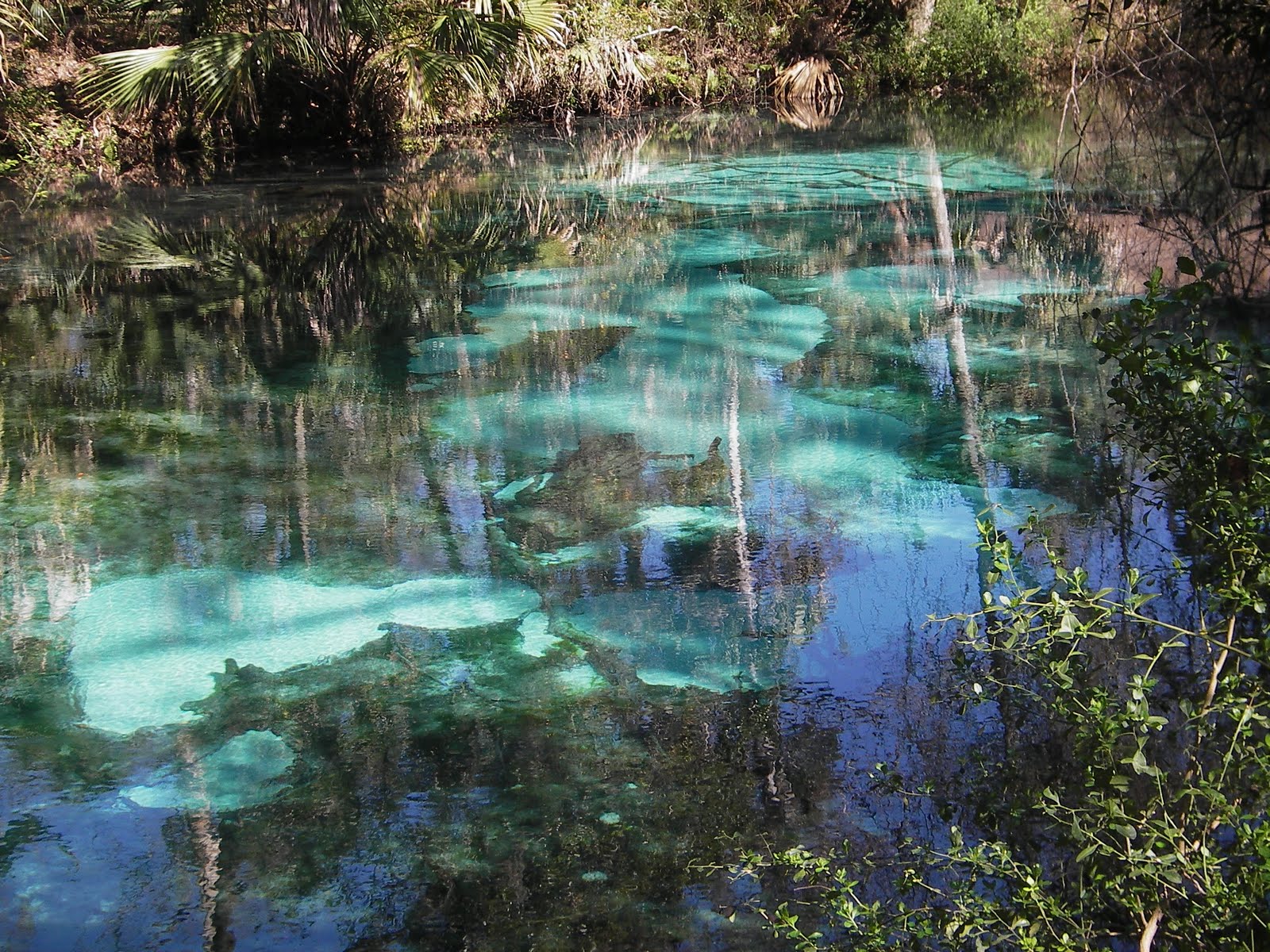
One of the Florida springs


Prairie, south of Gainesville, Fla.


Gorges du Loup with the village of Bar sur Loup, France. Although you can't see Gourdon, it's a perched village that overlooks Bar sur Loup and, on a clear day, you can see the Mediterranean.


Wild flowers (cistus)grow. In the Mediterranean basin, you can find miniature orchids as well as the herbes de provence.


View from Juan-les-Pins looking toward Cannes. The Esterel Mountains are in the background.


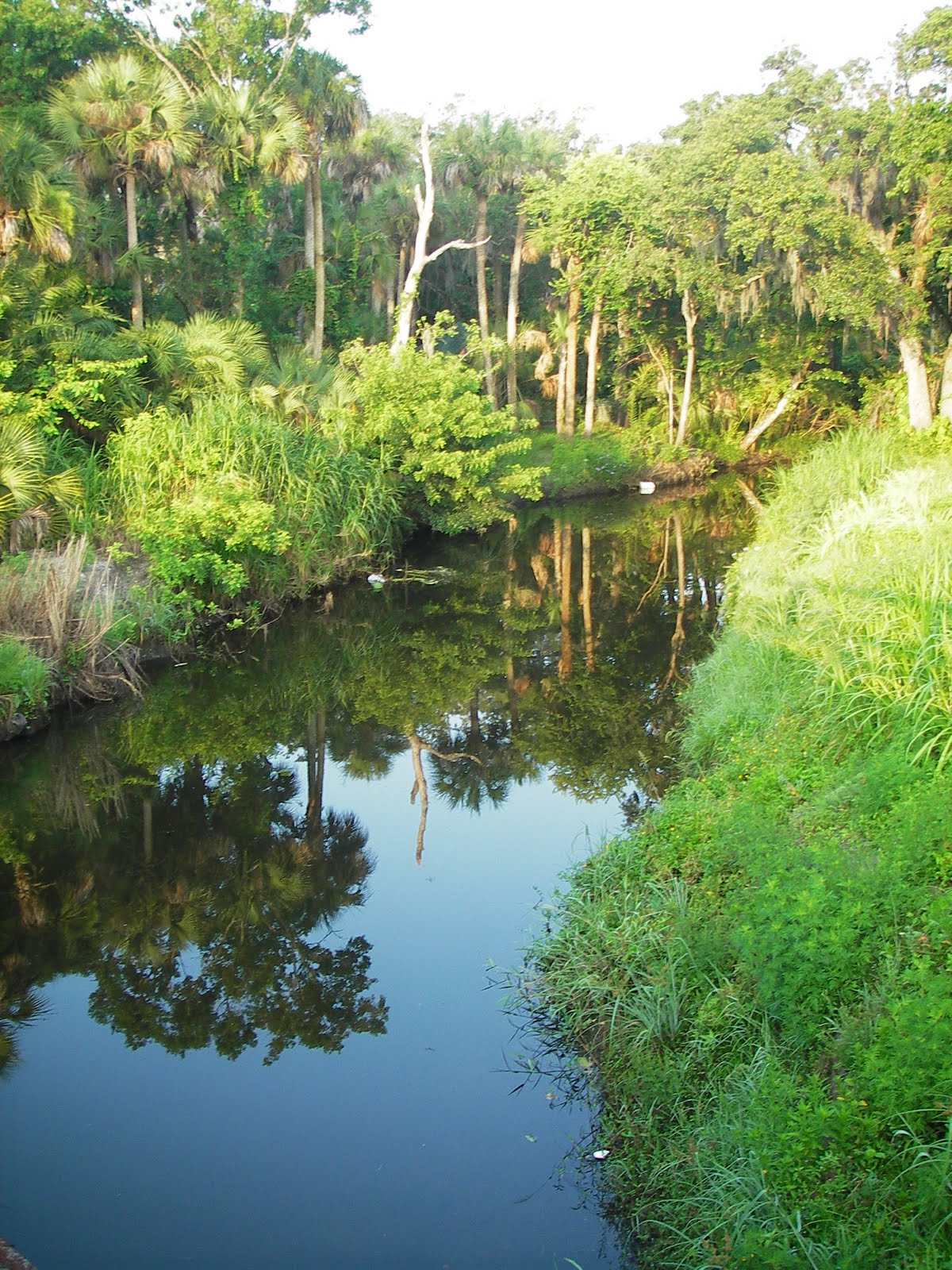
Crane Creek, Melbourne, Fla.


Earth Day. . . . Enjoy and protect! And if you have some time, comes to the Springs Forum at the Randy Batista Gallery Thursday night at 7 p.m. (Gainesville)

Tuesday, April 13, 2010

Les actualitiés. . . in the Nice Matin by Jane Tolbert


A boar was rescued as it swam two kilometers from the Marina Baie des Anges. A sailboat ran aground on a reef early Sunday morning just off the coast of Antibes. These news stories made headlines of the Nice Matin over the weekend.

But even the Nice Matin increasingly shows more focus on events of global import. This weekend, European news was dominated by the crash of a plane carrying 96 Polish officials en route to Katyn to commemorate the 1940 massacre of 22,000 Polish elite under the orders of Stalin. And the Nice Matin, which often focuses on the “insolite,” provided coverage. News travels ever more quickly in our global community.

Years ago, neighbors in my rural French community told me political assassinations or disasters were of little importance to their way of life. They meant, they still worked as masons or would have an aperitif at the end of the day, and they looked forward to hunting season. But with globalization, we have become more involved with events outside of our home communities. When I learned of this weekend’s tragedy, I wrote a Polish friend in Nice, where 3,000 Poles live. Within a couple of hours she wrote back, “There are tragic locations that attract misfortune.”

Headlines of the national media focused on Poland. Of the numerous articles about Katyn in Le Nouvel Observateur, a translated essay from Newsweek (“What Next for Poland’ by Andrew Nagorski) pointed out that certain events (like Pearl Harbor in the US or Katyn for the Polish) become symbols of tragedy, just like my friend had pointed out. These places need no words to convey the enormity. The journal also carried reactions from dignitaries around the world, including that of former Polish president Lech Walesa. Le Monde described journalists in tears and compared the gathering of dignitaries at White House to Buckingham Palace when news broke about the death of Princess Diana.

News not only travels fast, but so do reactions. For some readers, the Polish disaster raised questions about why so many officials traveled together on one plane. Others questioned airline policy that allowed landing in unsafe weather. Some readers criticized journalists for their lack of objectivity in coverage. Too much emotions and too many clichés, these readers said. Still other readers alluded to the cover up—the attempts to blame Nazi Germany for Katyn rather than Stalinist Russia. Unlike the media of years ago, we now have a type of dialogue that brings additional meaning to these events, some of which might have remained buried in history.

Swimming boars and grounded sailboats provide strange and ostensibly trivial stories that link together tragedies of great magnitude. Like its counterparts, the Nice Matin has always covered local news, which reflects the fabric of our society. But it also provides the major stories and reader reactions, which suggest that people do seem concerned by what transpires outside of their immediate community.

Wednesday, April 7, 2010

Scary Roads and Elusive Bike Racks by Jane Tolbert


More than two weeks ago I discovered (and purchased) a Saris “Bones,” which gives me the freedom to drive to safe biking routes. Given that Florida ranks among the top states in the nation for biking fatalities, I tend to ride very defensively.

But with the onset of warm weather, I decided to bike to run errands from my house. After all, I could use the back roads to get to Office Depot and the public library, both of which are only 10 minutes away. And even with construction, bikes can usually squeeze through.

But quickly, I encountered a major problem. The one back road—a critical intersection that enabled me to avoid the scary traffic—was under construction. Large trenches blocked me. Road construction and detour signs directed all traffic through endless neighborhoods of winding streets, depositing us on the big, scary roads in the midst of weaving traffic. My 10-minute errand turned into a 40-minute ride (well, I did get a workout ). When I arrived, I discovered that Office Depot, where I do a lot of business, had no bike racks. The manager did offer to let me park inside. As for the public library, those books will have to wait. The library has moved the bike rack to a very distance and isolated area by a Dumpster.

Google has recently unveiled its mapped bike routes, according to an NPR story aired on March 31, 2010. These maps will help all cycling enthusiasts to arrive at their destinations safely and quickly. But reader comments related to the bike maps pointed to a few “kinks”—like a 600-mile detour to avoid a bridge. And NPR reporter Jacob Fenston and a friend encountered additional difficulties when they tested a Google bike map to ride from Washington, DC, to Arlington. The estimated 34-minute ride actually took twice that long because all traffic was prohibited in some zones.

The bike map project arose from the efforts of Peter Smith, an Austin, Texas, resident who collected the 50,000 signatures to convince Google to create bike maps. Like Smith, cyclists everywhere dodge drivers on cell phones or with a trailer of lawn equipment or a boat in tow. The other day, a car flipped over on the causeway bridge just hours after I had biked by there.

The day safe bike routes in Melbourne are mapped by Google, I hope they include detours, bike racks and those stores where nice managers offer to help.

Wednesday, March 31, 2010

More than Candy Eggs by Jane Tolbert


My fondest memories of Easter are a jumble of colors, the race to collect the most eggs, new dresses that we wore in chilly weather and how cold we were in our short-sleeved dresses with purses that looked like little bird cages. There were the daffodils at a family farm in northern Virginia, religious celebrations and, of course, too much candy.

When I first visited France, the story was that church bells, which had been silent for a few days because they traveled to Rome, left chocolate eggs on their return home. But things have changed, and today the Easter bunny competes with the bells (bunnies are easier to market).

The egg hunts, which disappeared when we became older, returned when my kids were small. They competed with the family dog in the race for the most eggs. From this amalgam of candy-coated memories, I had one question—why is Easter a movable feast? That is, Easter is a holiday that moves around the calendar and can take place between March 22 and April 25. To add to the confusion, western and Orthodox Christians use two different calendars (the Gregorian and the Julian) to determine the date of Easter and often celebrate on different days.

From ancient times, celebrations around the spring equinox have been associated with death and resurrection. With Christianity, the method of dating Easter, established by the First Council of Nicea in 325 AD., became the Sunday following the first full moon after the vernal equinox.

When my sister and I left France to travel to Greece in 1982, Easter had been celebrated on April 11. We arrived in Patras (around April 18) to find streets were littered with red-dyed eggs (a symbol of resurrection and the blood of Christ), and the museums were closed not only for the religious holiday but for a strike. Of course, our planned day trips to see historical sites were further complicated by the fact signs for buses, schedules and attractions were in Greek.

My 17th-century friend, Nicolas-Claude Fabri de Peiresc (1580-1637), worked assiduously on the problem of the church calendar for the dating of movable feasts. He and other correspondents observed the movement of the Sun to determine the exact moment of the equinox, or when day and night are equal in length. An accurate calendar would enable the Catholic Church to determine the dates of Easter years in advance and help with the preparation of celebrations. What remains fascinating to me is that these astronomers, many of whom were priests, used churches as observatories. For example, by piercing a hole in the roof of the church and using a meridian, or north-south, line, often a brass rod embedded in the floor and marked with divisions, these observers were able to trace the daily passage of the noonday Sun and hence the solar year.

For those of you who may want to plan two Easter celebrations (both religious and commercial), this is not the year. Both western and eastern traditions celebrate Easter on April 4. But that will not prevent kids from freezing in their Easter outfits as they hunt eggs throughout the world.

Wednesday, March 24, 2010

It's in the Stars by Jane Tolbert


Feeling blah. In a funk. J’ai le cafard. Il faut me remettre . . . . Weather or planetary alignment? Maybe the explanation lies in my horoscope. . . .

Horoscopes these days are consulted for romance, business endeavors, finances or those cranky attitudes that can’t be attributed to anything else. In earlier times, princes and kings placed the utmost importance on their horoscopes, consulting them prior to invasions, marriages, political alliances or perhaps even to explain that royal “cafard.”

Astronomers like Kepler supplemented their incomes by making astrological predictions. Anne of Austria asked for the horoscope of the dauphin, the future Louis XIV. Apparently, this early horoscope was not too favorable, but Louis XIV lived for 72 years, proclaimed, “L’état c’est moi,” enjoyed the pomp and splendor of Versailles and depleted the treasury.

On March 21, with that feeling of the “cafard” intensifying for no reason, I consulted both American and French horoscopes to learn what the stars and planets had in store for me. None of my horoscopes was particularly encouraging. MSNBC implied that my dreams would come to fruition if I showed patience. After a rough week, the horoscope implied the weekend would provide a respite. The French Yahoo site mentioned that personal relationships were coming unraveled. Take a break, it advised. Recharge my batteries. Although the daily horoscope is free, the week-long version is 2,95 Euros, and the extended version is 11,95 Euros. Best to avoid that expenditure if it means more bad news.

Madame Figaro provides a daily barometer that has four categories (with icons ranging from a smiling sun to a frowning, gray cloud). Bien être (well being), carrière (career), humeur (disposition or temperament) and amour (love). A sunny icon said that in terms of energy and vitality, I am “dopée,” or psyched. Career, another sunny icon, promised an “auspicious time” in terms of a finding a job. That is good news in today’s recession. A frowning, gray cloud by the category disposition meant that I have the “tendency to see things negatively and to become angry at things that are unimportant.” Another gray icon clouded love and relations with friends and family.

These horoscopes only reinforced my "cafard." What would royalty do with such a week of dire predictions? Or did astrologers generally give rosy horoscopes just to retain a lucrative position in a royal court? I will check again next Sunday to see if the forecast has improved.

Wait! There’s one more—the horoscope page from the Closer, a French movie star/ gossip magazine, was beneath work papers and my coffee cup. The horoscope for Taurus reads like this: “You will finally achieve your dreams. The fear of failure had made you forget about them. Now, you are finally ready.”

Given that stars and planets are aligned in my favor (for now), I’d better stop.

Wednesday, March 17, 2010

Vizcaya, the Next Big Thing by Jane Tolbert


An Italian Renaissance palazzo on Biscayne Bay. A French tea house. Docks for gondolas. Fountains with tiny jets of water reminiscent of the Moorish influence. Grottos, secret gardens, mossy fountains, graceful stairways and wide alleys. Weathered statuary and carvings, some of which emerges from the rock. Vestiges from the Renaissance or an illusion? In his foreword to a book on Vizcaya, Carl Weinhardt quoted Shakespeare’s As Your Like it: “All the world’s a stage. . . .”


The stage was set by James Deering, who made his fortune with International Harvester. He hired an architect, landscaper, and interior decorator to build a palazzo overlooking Biscayne Bay at a time when just about anything seemed possible in Florida. Natural resources appeared unlimited. The Everglades were being drained to create an agricultural cornucopia as well as rid the state of what was then considered a wasteland. Carl Fisher developed Miami Beach and George Merrick, Coral Gables.
“Nothing of the size and scope of the proposed Vizcaya estate had been attempted in Florida before this time,” wrote Doris Bayley Littlefield, curator of collections, Vizcaya Museum and Gardens, and author of the book, Vizcaya.


To have a small Italian Renaissance palazzo overlooking Biscayne Bay does seem somewhat frivolous, particularly given Deering’s penchant for original European furnishings, antiquities, marbles and the elaborate detail of the construction itself.

In 1916, he opened his estate to family, friends and celebrities. More recently, it has been the setting of a papal visits, movies and fund raisers. Vizcaya may have been a stage set for sumptuous parties back in its heyday. But today the stage is set for quinceañeras.

One Sunday in late January we visited Vizcaya. More than 15 years had passed since I had seen the gardens and the resident cats, and I had never visited the interior. The wind blew in gusts, and the clouds covered the skies. We waited in line to pay our $15 admission and watched a type of staged performance as a photographer, lighting technician, a makeup artist and anxious parents fluttered around a young girl dressed in a billowing, marigold-colored gown. Her entourage helped her gather the large skirts of the gown, refreshed makeup and shouted directives for the next photo shoots. Someone in line explained the importance of this rite of passage as a young girl makes the transition into womanhood, which implies not only her coming out but also her acceptance of responsibility. This girl was only one of numerous quinceañeras we could see that blustery day.
Unlike Versailles or the Biltmore, Vizcaya is a palazzo on a manageable scale. The gardens are enticing, and they encourage visitors to linger or even sit alongside the basins. In contrast, the interior seemed very formal, too contrived, with its décor just a little too heavy and ornate, and with a view of Biscayne Bay nearly obscured by draperies. Back in the gardens, descendants of the original cats lingered near the sandwich stand awaiting handouts (I shared my grilled cheese). One quinceañera stood in the public bathroom applying more makeup. Vizcaya continues to offer a dream-like stage.