Showing posts with label Gainesville. Show all posts

Monday, April 22, 2013

Florida Wildlife Corridor - What Better Way to Celebrate Earth Day 2013!


The early history of Florida focuses on the discovery of springs associated with renewing properties. Then in the late 19th and early 20th centuries, the hydrology was altered to “transform wasteland into gold,” as developers said. Only recently, little-by-little, have most of the public come to recognize the value of this unique ecosystem.


This month, numerous PBS affiliates are airing a documentary on the Florida Wildlife Corridor that chronicles the 2012 100-day, 1,000-mile trek by four individuals (conservationist Mallory Lykes Dimmitt, photojournalist Carlton Ward Jr., cinematographer Elam Stoltzfus and bear biologist Joe Guthrie, map taken from the website), which shows migration paths (and obstacles) of wildlife.


Loop Road, Big Cypress Swamp

The project has numerous goals, which include the creation of habitat and migration paths (basically, wildlife greenways to enable passage under highways and the linking of conservation areas), protection of the flow of water (Everglades and wetlands) and education of the public through experiences that enable individuals to connect with nature.


Deer, Gainesville Rails Trails

For all of us on Earth Day, we should take to heart the words of the Florida Wildlife Corridor participants, to protect these spaces for “solitude and sanctuary,” critical to the existence of the wildlife and water flow of our unique ecosystem in this state of more than 19-million residents.


Mangroves, Melbourne causeway

Thought for Earth Day. . . .Imagine what it would be like to be wildlife, trying to get from your neighborhood to the nearest source of water.

Monday, January 9, 2012

Slow Start to 2012. . . .


We're more than a week into the New Year, but instead of looking ahead, I have been thinking about all those things I planned to do in my free time--like getting the car checked, taking a short trip out of town to see my daughter in Miami and attend a milonga.


In lieu of the movie, perhaps Tintin chocolates (Antibes)


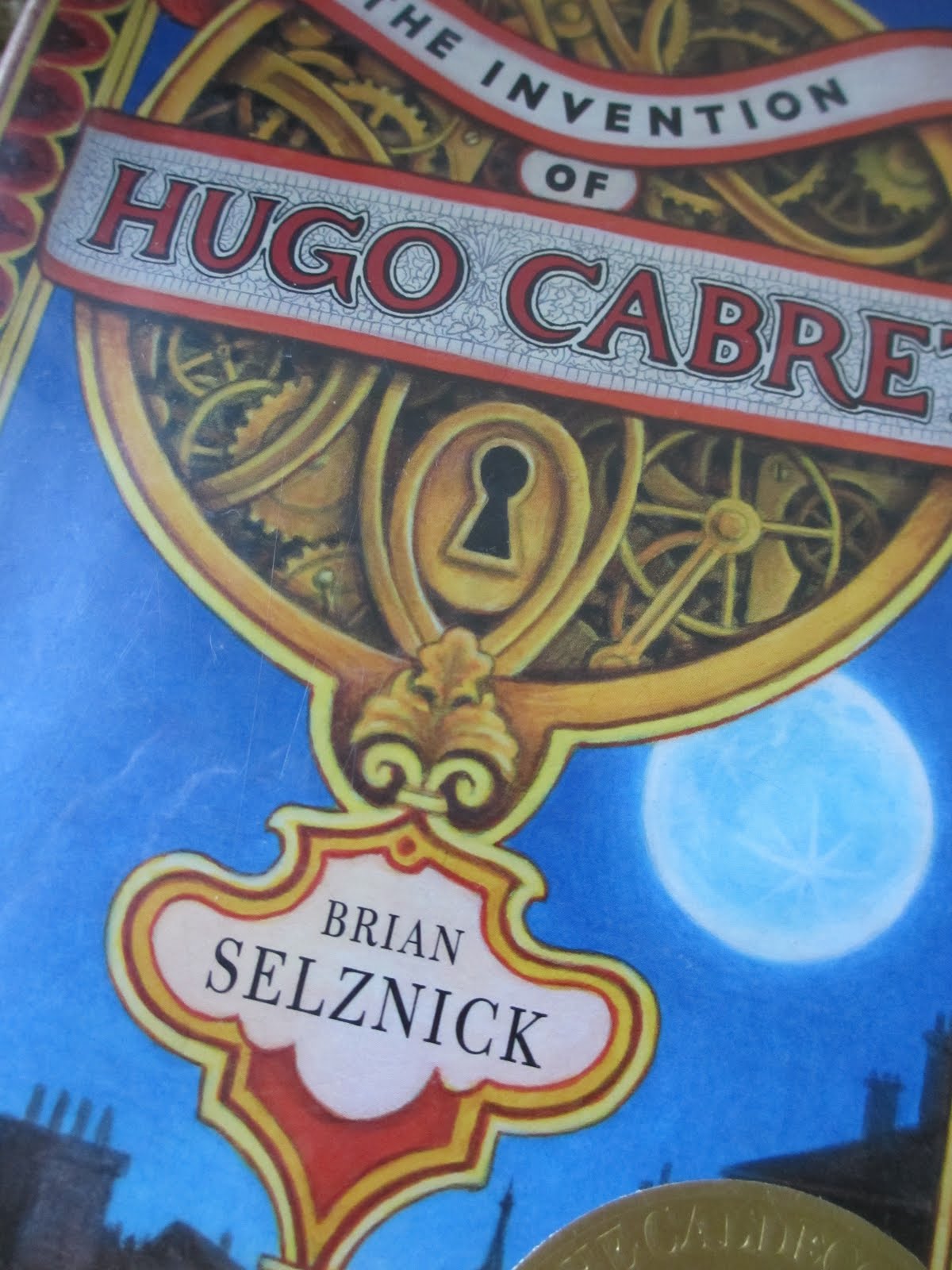
About those movies I planned to see--Hugo, the Girl with the Dragon Tattoo and Tintin. . . .Well, I've read the books (admittedly, not the same thing, but Hugo is 533 pages of narrative and illustration). I think it was the 2-hour-40-minute playing time for the Dragon Tattoo that made me balk. And, as my son pointed out, the fact that Milou, the white terrier, is called Snowy in the American version of Tintin. . . .

While on break, I didn't keep up with television news or political advertising, both of which distract from the real issues (e.g., the need for national health care, protection of natural resources, quality education for all). I planned to make an Epiphany, or Kings', cake for Jan. 6. But the puff pastry requires hours of preparation. I still have about 365 days to figure this out for next year.


I did amp up activities and plan a 3-mile noon walk around Lake Alice as part of daily activities. It's a nice break from my day job.

Although I'm off to a slow start, I still have a good 350-plus of days in which to make those resolutions!

How is your New Year shaping up?

Monday, September 19, 2011

One hot Kiss and a $35,000 dance. . .

GAINESVILLE, Fla.--No doubt about what that sailor had in mind—one big kiss!


The sailor’s kiss is just one of numerous bronze statues by Seward Johnson scattered around town and on campus until Oct. 14, 2011. They make you do a double take--—the lady sitting on a bench in front of a bank on the corner of North Main and Second or the policeman giving out tickets by parking meters.


The massive 20-foot statue of a waltzing couple on the Plaza of the Americas—well, that is just big.


I like statues that leave room for imagination—like those by Miró, Calder or Arp. Locally, we have copper doughnuts (described as Cherrios) at the law center.


Although not quite a sculpture, a large meteorite on Turlington Plaza certainly looks like art and is routinely “dressed” for Halloween as Mr. Potato Head or covered in tinfoil.


The Solar Walk along Eight Avenue takes you past the planets and meteors, providing bits of information as well as quotes.


Whether you like explicit or implicit works, the good news is that the local community sees the importance of bringing art into our lives.


And about that $35,000 price tag on the dancing couple. . . Could someone enlighten me?

Wednesday, September 1, 2010

A Compact City by Jane Tolbert

It started with a conversation the other day at the Great Outdoors Café in High Springs. A former high school classmate described Gainesville as a great place to live—earn your money here, take trips to other places and bring back those experiences to the city. Good advice that I plan to follow. The mixture of people—local and international, well traveled or experienced, well read or educated in life—is what makes up the fabric of the city.

Gainesville has been my home off and on for many years. Although I’ve been tempted by large cities, which offer more activities, they usually require a commute to work. The reality is that at the end the day (especially one that requires a commute), even the most tempting restaurant, play, museum opening or milonga will not draw me out.

However, in Gainesville, with most activities within a 15-minute driving radius, I actually get out more. The community seems friendlier, the streets seem safer for pedestrians (I think it’s more than the brick cross walks) and more people are out on the street. Landscaping appears more sustainable—it’s actually Florida-Friendly. More effort to blend environment and structures, more parks at least on the UF campus. I hope to have more time to explore the city itself.

Each time I return to Gainesville, the city has progressed. When I used to take my kids on the rails trails probably about 15 years ago, the bikes always got mired in the deep sandy trails. The rails trails, now asphalt with connectors, attract numerous cyclists. I can bike from the UF campus and join the greenway that cuts just south of the historic downtown with its restaurants, galleries, theatre and residential areas. If I had the energy, I could ride to Hawthorne.

Although the town has close to 130,000 inhabitants, I always run into someone I know at one of the popular watering holes, an opening at Media Image or even on the rails trail or on campus. We greet then admit our embarrassment. “I’m so sorry. I never was too good at names.” On those weekends when all events seem to have shut down, someone gets a call out of the blue. “Can you come—I’m giving a birthday party for an 80-year-old friend. Please, no presents.” The friend in question—a matronly crepe myrtle in full bloom.

So what is missing? Maybe pétanque?

My images are missing too--they will be uploaded asap!

Thursday, September 10, 2009

Pipedream or Paradigm? by Jane Tolbert


Rails to Trails Overlook


South Rim

When we think of ideal biking locations, the Northwestern United States or Europe come to mind. But ever so slowly networks of greenways are inching across the American landscape, offering the possibility of biking on off-road paths or little-traveled highways. What might have seemed a pipedream years ago is becoming the new paradigm--a shift from the automobile-based lifestyle of recent generations to one that focuses on exercise. Let’s hope this trend continues.

In the Melbourne – Cocoa area, cyclists meet at Viera or Cocoa Village for a 25-to-35-mile loop that follows the Indian River Lagoon. Some of these roadbikers in brightly colored jerseys have such a competitive gleam in their eyes that I know this loop is not for amateurs. I’ll ride at my own pace and maybe meet them later at Ossario’s Café. I’ve trailed other cyclists who gather near Mather’s Bridge to pedal a 10-mile circuit on South Tropical Trail along the Banana River and taken a predawn ride along Riverside Drive between the Eau Gallie and Melbourne causeways.


Mather's Bridge

Biking technology has really changed since the days my sister Margaret and I shared ‘Thunderbird,’ our first bike. The massive-framed green bike had coaster brakes, streamers on the handle bars and a clattery kickstand. We got our thrills from riding with feet on the handlebars or pedaling furiously up and down neighborhood streets of Virginia. And it probably took both of us to lift the cumbersome Thunderbird to an upright position. Today, we don’t even have to stand to pedal uphill. The lightweight frames, comfortable seats and gears make bikes easy to ride.

Weekend activities are planned around meeting friends for a bike ride. In the Gainesville area, we biked the popular 16-mile Gainesville-Hawthorne Trail. Other times I have joined friends at Split Rock, the South Rim or the San Felasco Hammock, all of which provide miles of sandy paths as well as encounters with deer, bird and, if not the cougars or bear themselves, at least their paw prints.

So why isn’t everyone biking? The network of trails still needs to be linked. Portions of many bike routes contain a mixture of high- and low-congested areas and roadside debris, conditions that preclude many commuters or school kids from biking. One my favorites workouts in Melbourne is to ride the causeway bridges that link the mainland to the barrier islands. But an element of fear offsets the salubrious benefits of a cardio workout. I dodge road debris within feet of speeding pickups, towed boats or SUVs.

The combination of exercise, outdoors and chats with friends make biking somehat addictive—enough to get me out before 8 a.m. on weekends. It’s unlikely I’ll ever ride more than 15 or 20 miles, but I am looking forward to the day when I can access a greenway from my neighborhood, ride my bike and feel like a kid.

Friday, June 12, 2009

Florida Storms by Jane Tolbert


In the late spring, the media go into “storm mode,” the countdown for the six-month hurricane season that begins June 1. Most Floridians would rather avoid the reminder. After all, the four hits in 2004 are still fresh in our minds even though most of the blue tarps covering damaged roofs have disappeared.

As we move into the summer, grocery stores issue storm-tracking maps printed on the sides of the brown paper bags. The bank provides hurricane survival lists. Weather forecasters show images of a storm forming off the coast of Africa. Day-after-day they track its development, predicting it will gain strength, become more organized and then intensify. Once the storm arrives in our proximity, reporters in nylon parkas appear on the scene, braving winds and rain against the backdrop of blowing palm trees. With our safety foremost in their minds, they promise to continue live broadcasts. Stay tuned.

Our garages provide a constant reminder of hurricane preparedness. Since many homes do not have permanent storm shutters, corrugated aluminum sheets or wooden planks remain stacked against the walls, some still bearing captions like, “Good away, Charlie” or “We’re ready, Ivan.”


Our cupboards contain jars of peanut butter and cans of beans with a long-past expiration date. The batteries stored on a closet shelf can no longer bring a flashlight to life. Our three-day supply of bottled water has gone the way of the gym. The emergency cash in the kitchen drawer has long since been used for more pressing purchases. Since that last storm when all the cell phones either died or the towers jammed, we have planned to buy the traditional cord phone. Our cars should contain a full tank of gas for an evacuation.

We had two hurricanes in rapid succession target the Melbourne area in 2004. We evacuated the barrier islands for Hurricane Frances along with 70 percent of the inhabitants. One neighbor loaded family heirlooms in a rental truck. Others felt a storm might be a way to get rid of unwanted belongings. We filled our Mustang with laptops, pets, a surfboard, a box of CheeseIts and our homeowner’s insurance policy. We headed up the coast then inland through the Ocala National Forest, following a stream of cars and horse trailers. Once with family in Gainesville, we waited for the storm to make landfall. There, most of the damage came from pine trees that snapped in high winds. Cleanup crews and utility trucks spent days clearing debris from the main roads. We joined neighbors armed with chain saws, ropes and pickup trucks to clear residential streets. We headed back to the Melbourne area, this time following utility trucks. Fragments of street lights, advertising signs and political campaign memorabilia littered the beachside roads and blocked storm sewers. Service stations had lost their awnings and covers. Grocery stores had no frozen or fresh products. Few canned goods remained. Beachfront hotels appeared gutted, the facades damaged or missing and plate glass shattered. Parking lots and Dumpsters now overflowed with water-logged mattresses. It looked like a war zone. On our street, tree limbs, shingles and planks created an obstacle course. The branches of my stately Norfork Island Pine now clogged a neighbor’s swimming pool. But our roof remained intact. A week or so after our electricity came on, Hurricane Jeanne targeted our area. But this time, 70 percent of the residents remained. And once again, our communities were plunged into darkness.

The media had provided blow-by-blow coverage of the hurricanes, but after several days of reporting on the financial cost, they moved on, often missing the poignant stories, a juxtaposition of good and bad. The firemen willing to help but the numerous blue tarps that remained for more than a year. The absentee insurance adjusters, the shyster roofers or tree cutters, or the shelters that closed, leaving many area inhabitants and their pets homeless. In some cases, families took in friends, and neighbors organized candle-lit dinners. Surprisingly, many things did not blow away--the mermaid figurehead on what was then the Pineda Inn on US 1, Mrs. Mango’s small house, known for its herbs and teas and for the county teachers, all those student essays that still needed to be graded.
# # #