Monday, December 31, 2012
Musings on New Year's Eve
Here are (some of) my resolutions for the coming year. . . . Take time or make time to connect with family and friends and pets Time to travel & expand perspectives Time to meet new people, explore & help or encourage others --Dr. Seuss--Horton the elephant tried to protect everyone. "A person's a person, no matter how small." Time to read & learn Time to dream --Cinderella's Coach (from the Disney movie) Have a Happy New Year! Bonne Année!
Sunday, December 23, 2012
Forget the Educational Holiday gifts. Go for Action Toys!
Take it from me, someone who bought her kids educational toys for too many years.
When my kids were about 10 or 12, I wanted to get them an educational Christmas present. You know, the mini-science lab that leads to a hobby. I had been reading about incredible observational feats of 17th-century astronomers (like viewing the moons of Jupiter) with a very rudimentary telescope. Hummm, a telescope might be fun.
I called an astronomy professor, who spoke to me at great length. He asked what we wanted to view, but then the conversation quickly went beyond my basic understanding. He advised a reflector.
--I hope this won’t be another telescope that sits in a closet!
--Oh no! I assured him.
Of course, we encountered problems with the telescope. Too much magnification meant we could see surface features (not the entire celestial body). We also had a problem with calibration. Very quickly, that telescope went in the closet but all the kids’ friends had action toys that still worked.
Just this fall, my daughter and I were clearing out a closet in France.
--Do you know what this is? She pointed to long, narrow box.
--No. . . .
--The telescope!
Not only had I bought the kids an educational present, but I had moved it to France, where we had the perfect conditions for night time viewing (e.g., no light pollution) but no one to help with calibration.
So before you consider purchasing that perfect educational gift, check with me. I’ve still got a telescope in my closet. . . .
Sunday, December 16, 2012
The Mail Gets Through but Sometimes Via a Circuitous Route
Years ago when I was at Anthony Seeger Campus School, a missionary came to our class to talk about her experience in Africa. One of the things she showed us was an envelope addressed with just the words, Miss Kathryn Eye, Africa. The letter, which was from a small child, eventually arrived.
Recently too, I sent a box of childhood toys to my son in New England at a time when he was moving. Three post offices kept me updated of efforts to locate the package, insisting that each client and each piece of mail is important to them (along with the 554 million pieces of mail handled daily). That box, even without a tracking number, was located.
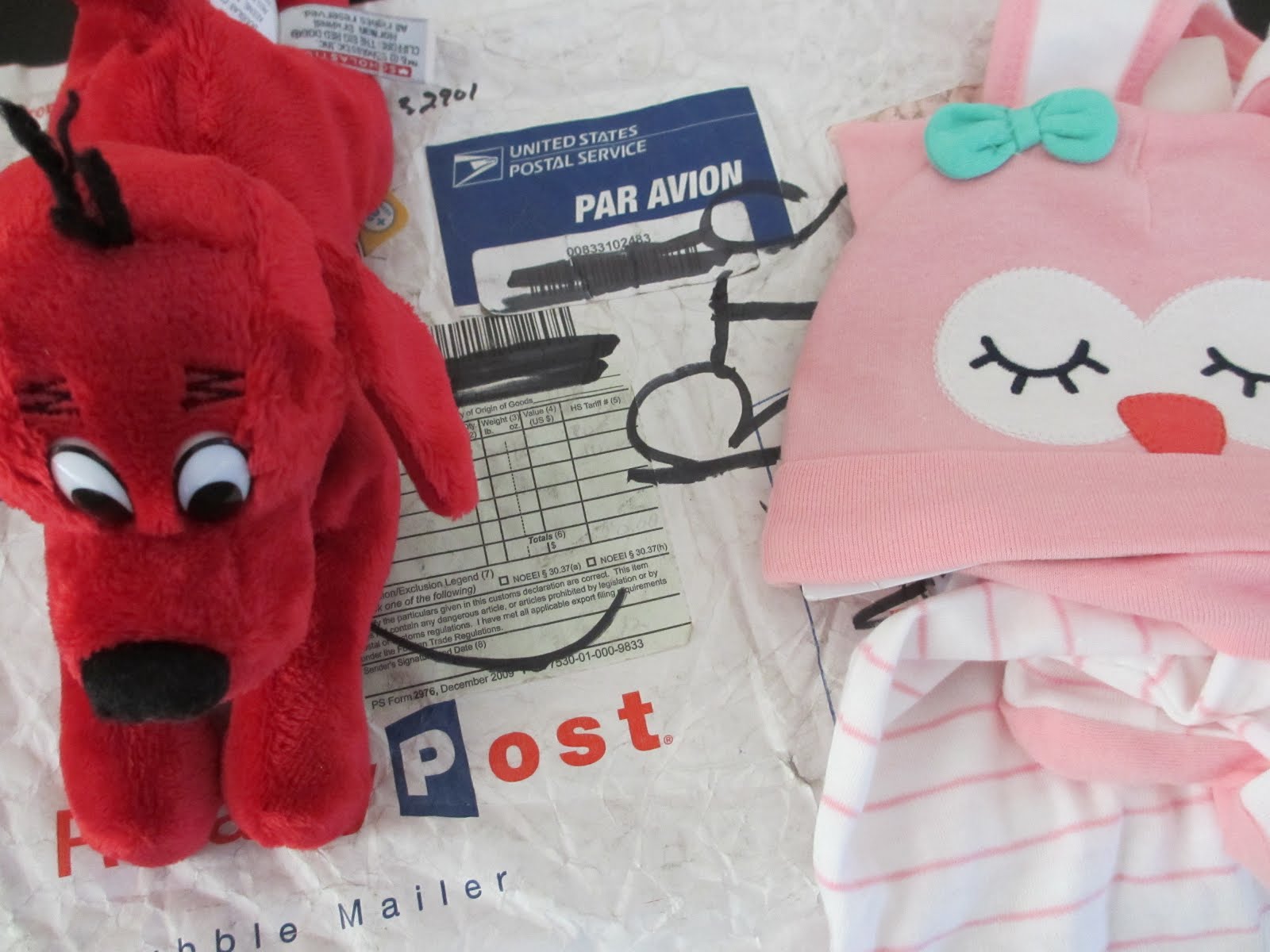
This past Jul 19, I sent a baby present to my nephew and wife. I later learned the French post office only holds packages for two weeks before they are returned to the sender. The package, which contained a Clifford the dog and very small clothes for a newborn, just found its way back to my house (Dec. 14). Needless to say, the clothes no longer fit. But Clifford may travel again.
Sunday, December 9, 2012
Do not open til Christmas. Jamais la vie!
Just the other day we were talking about shipping Christmas presents to an address where my son, notorious for opening presents early, cannot find them.
A previous year, we told him the presents were for Uncle Bob, a fictitious person we invented to prevent him from tearing into packages.
My daughter is about the same in her enthusiasm for opening presents early. Me, I believe in waiting until Christmas morning!
Then, a box arrived on my doorstep. My son had texted me to say he had shipped me a present. I could open it early.
Me? Open early! Jamais la vie! Never. I like to wait until Christmas morning, I reminded him.
Two days passed. That box sat in the hall. Maybe if I just opened the outside box to peek.
Well, he did say I could open it early.
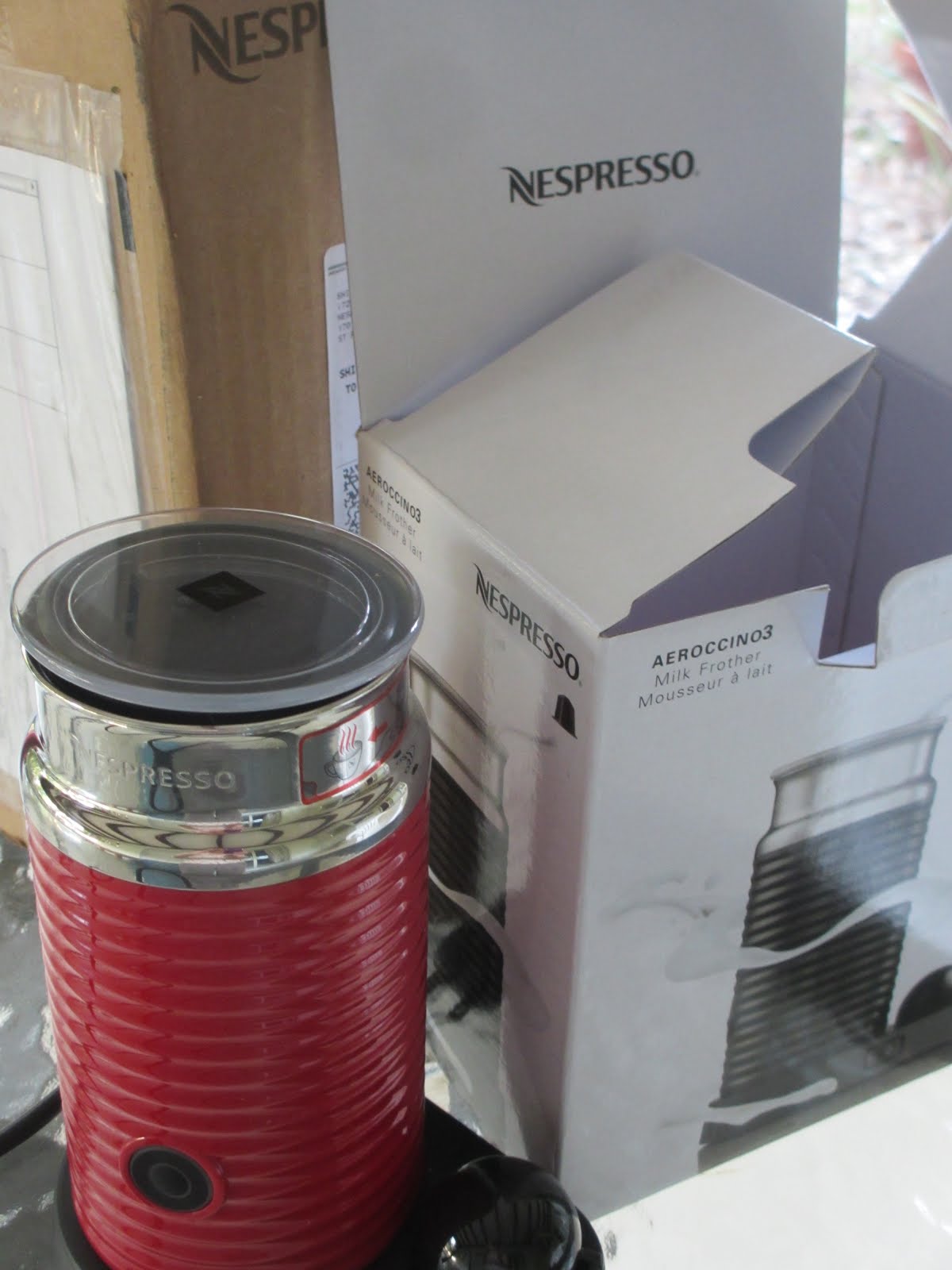
A Nespresso milk frother! Perfect for a cappuccino. When we were in Paris in late September, two cafés refused to make us cappuccino.
So maybe I should say that I never open presents early. . . unless they come early!
Monday, December 3, 2012
When Nothing Grows in My Garden
My dream would be an apartment with at least two balconies, facing different directions for the sun. While in the South of France, it’s easier to find an apartment with a balcony, in this part of Florida, it’s much easier to find a house. So I am facing a yard where nothing colorful seems to grow. I have some palms and laurel oaks, but few flowers.
Starting a flower bed is pretty overwhelming. That’s space you’ve just cleared of the mesh of roots and weeds, requires more than a car trunk full of little plants and bags of dirt or mulch. After many attempts at a border, I know better. Go for something smaller, more manageable.
I have started with several flower pots, some for shade and others for sun. I got the idea from walking through the Florida Tech campus. The landscape folks had transformed a very boring area (known as the “quad”) into inviting spaces with the addition of pots and borders.
My first attempts at flower pots (now known as container gardening) involve a $16.99 cobalt blue ceramic pot from a Ross Department store, hot pink geraniums, alyssum and small pansies in pots that take sun. Coleus and dusty miller and New Guinea impatiens are for the partial sun spots. I was hoping to find more draping or trailing plants. But that will be on the next trip to the nursery.
Although I would still prefer a balcony overflowing with ivy geraniums and roses, these spots of color will do for now. The plants have a good chance of survival, and I am not overwhelmed by borders.
Monday, November 26, 2012
Post-Thanksgiving/ Black Friday Musings
So what was it like, Black Friday, I asked a Target employee in electronics. Well-mannered crowds who thanked him for working on Thanksgiving. The popular items—iPads, iPods and phones. And yes, the shelves are socked today for those of you with some cash in your wallet. I’m not sure I envy these people, standing in line for hours or even days, but at least they have ideas!
Our family tuned in to the Macy’s Parade, but this year we quickly tuned out—too many breaks to non-parade events (like singers), boring floats (can’t McDonalds do better than the clown—I'm partial to the fries and soda)—and some ho-hum announcers.
With major ongoing cleanup efforts from Sandy , couldn’t the media have cut away to some of the scenes— the more than 10,000 Thanksgiving meals served by Occupy Sandy and more than 26,000 by the city of New York to affected areas?
The focus of what used to be Thanksgiving is now spending. According to media reports, 247-million shoppers (in-store and online) spent an average of $423 (for a total of $59.1 billion—those figures may be updated later this week). One economist predicted spending would subside—after all, so much was spent in this initial Thanksgiving-Black Friday weekend. For those of you with pocket change remaining, there’s always Powerball (with $425-million).
A lot of you have gotten shopping underway, but I am still seeking ideas. . . . .
Monday, November 19, 2012
Thumps in my attic, mice and cookies and wayward wildlife
If you have read If You Give a Mouse a Cookie (Numeroff, 1985), you’ll remember the potential consequences of sharing a cookie with a mouse. You find yourself in a demanding relationship. . . .
It started with occasional thumps in the attic, then evolved into what sounded like wild parties. Even my cats sat vigilant, watching the ceiling above my closet, as if something might fall through.
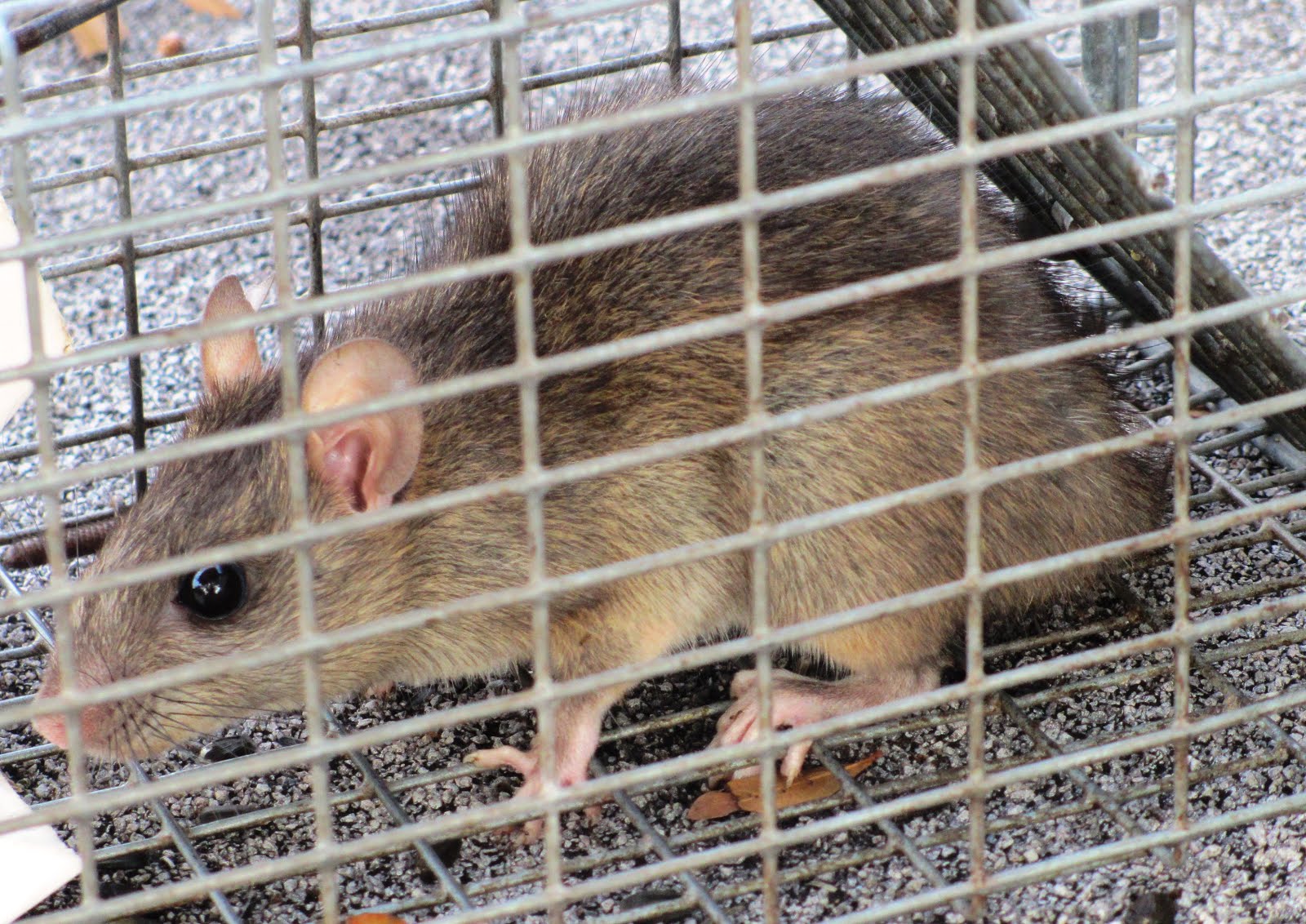
A wildlife trapper left baited cages. And early the first morning, I saw a mouse had been caught. He was much too small to be the party animal. But still he had been caught and needed to be released quickly. A rooftop in the Florida sun is no place to be. Waiting for the trapper to return (eight hours later), I moved the mouse to the shade, gave him a name (Vito, nicknamed after a famous tango dancer) as well as some fruit to keep him hydrated. We were starting to bond. By noon, I moved the mouse down the ladder to a shaded brush area under a tree. By now, I have posted his picture on Facebook, and he’s getting lots of “likes.”
But he was wildlife and didn’t want to be caged. All those committees I served on monitoring the treatment of laboratory animals in a university made me question guidelines, concerning captured wildlife.
By early afternoon, I had called numerous government agencies, each sending me elsewhere--county animal control, Fish and Wildlife Commission, Florida Department of Agriculture and within that agency, the Department of Entomology and Pest Control, which deals with rodents. My mouse, a rodent! I left a message, and to date, no one has responded.
Finally, I called a friend at a school of veterinary medicine. We agreed--the most humane course would be to release the mouse to the nearby woods. The trapper arrived just as I was preparing the release mission. I plan to learn more about the guidelines for treatment of captured wildlife.
My mouse was not demanding, but would he have been if we had started with a cookie?
Sunday, November 11, 2012
Lagoon Day--A Missed Opportunity?
MELBOURNE—Nov. 20, 2012--The name itself resounds with potential! The lagoon, which extends 156 miles, is home to the bottleneck dolphin and thousands of species of flora and fauna. Considered the most diverse estuary in North America, its health is critical to the water quality and the economy of many communities.
I only learned of Lagoon Day from small signs I saw when biking. Online information included a listing in a community calendar and a press release from the St. Johns River Water Management District. Were these the only ways to promote the event?
When I went Saturday at noon, the non-profit workers and booths outnumbered the public. Most text-dense documentation focused on detailed information about the geographical features (such as Canaveral National Seashore), water pollution or flora and fauna. Even the talks were pretty specialized—algal blooms and sea grass, funding agencies, stormwater impact on the lagoon.
An inflatable castle, face painting, a turtle hurdle game and some coloring books targeted the younger kids. Making an oyster mat or planted mangrove seedling (propagule) might have appealed to the older kids.
Non-profits have inadequate financial resources. They need to create specialized messages that address the local audience. They need to be able to provide hands-on activities that engage young, receptive audiences. Would it have been possible to bring in a boat? Show water testing? Have a large-scale model of runoff from lawns into the water? Show the impact of chemicals on wildlife?
A Lagoon Day needs to be as almost as much fun (and more educational) as a trip to see Santa at the mall or a Halloween street party. Maybe we can work together for a Lagoon Day, 2013. . . .
Monday, November 5, 2012
Aftermath of the storm and eve of the election
In the aftermath of Hurricane Sandy, communities continue to deal with lives lost, property damaged, power outages, transportation system shutdowns, insurance claims and cold weather. . . . Now, some areas are working to provide alternate voting sites and still deal with the cleanup.
What is encouraging in the midst of the storm and the too-frequent verbal snipes in an election campaign is that across the nation, approximately 35 percent of voters took advantage of the early voting (and some had to wait in line for hours).
Although the New York City marathon was canceled, many runners have volunteered to help in the relief efforts.
The 2008 presidential election had a 61.6 percent voter turnout, according to FactCheck.org. Let’s hope for record turnouts and quick relief efforts for the victims of the storm, all of whom are in our thoughts.
On another note, has anyone calculated the adverse environmental impact of these campaign signs?
Monday, October 29, 2012
All Eyes on Hurricane Sandy
Area known as "dog beach" in Melbourne, Fla., on Oct. 27. Sandy was still a tropical storm.
These past few days, the media have taken a break from election coverage to talk about Hurricane Sandy. It skirted the coast of Florida over the weekend, remaining off shore but causing beach erosion.
Now, a much stronger storm is heading for the New Jersey coastline. Storm surges, flooding and wind will impact large areas of the Northeast. Residents in endangered zones have been told to evacuate. Schools, offices and Atlantic City casinos have closed. Flights have been canceled and mass transit routes closed.
Atlantic City boardwalk in summer months.
For residents of Melbourne (Fla.), memories haven’t faded of the 2004 season in which two storms hit the area. Power did not return for 10 days in most places. Buildings suffered extensive damage. Blue tarps remained on some roofs for a year or more. A lot of businesses never reopened. In the last month, many of us Floridians received a notice from Citizens Insurance (the government-created insurance of “last resort”), saying that unless we take action before Nov. 6, our homeowner policies will be shifted to other companies. Change like this is rarely a good sign.
Although our coasts are heavily populated, we have advanced warning systems. Think back to the Great Hurricane of Miami of 1926 that killed more than 373 people and injured approximately 6,00 and left thousands homeless. Those people had only a few hours’ notice. They assumed when the eye had passed, the storm had moved on. It hadn’t. In the aftermath, state officials and newspapers, fearful of losing investment and tourist dollars, downplayed the disaster (which slowed relief efforts) and talked instead about new construction.
It’s 3 p.m., the storm has picked up speed. I have had Facebook reports of flooding since last night. I’m keeping updated via the Internet, news reports and TV. We hope for the safety of residents and a speedy recovery process.
Sunday, October 21, 2012
2012 Presidential Debate--Talk v. Actions
The media coverage of the debate makes it sound like voters will base their decision on a 90-minute televised match. That is, on rhetoric/ talk rather than actions.
In the aftermath, a lot of the media coverage of the second debate reads like a sports story--a play-by-play account with a few quotes or sound bites then comments about ratings or polls or candidate performance.
Covering the real story, which involves examinations of previous administrations, requires some serious fact checking and historical research, something many members of the media seem loathe to do. Maybe their corporate sponsors fear flak. . . . But still, some media (both US and foreign) provided in-depth analyses. And reader forums pointed to things to keep in mind: the positive contributions of the Obama administration in terms of health care, military exit strategies, Wall Street reforms, tax reductions and job creation. . . . positive contributions in the face of the "legacy" left by previous administrations.
Here are just a few of the rights voters should strive to protect:
- to an education (which should not be based on ability to pay tuition but on ability)
- to affordable healthcare
- to taxation based on income/assets rather than ability to find loopholes. BTW, taxes are not bad. Education, a clean environment, security, arts and culture, mass transit and jobs/ training are among the things that have to be financed.
- to civil rights and equality. . . .
--to a clean environment (safe water, protection of natural resources, educational outreach)
At this point in the campaign process, many of us are tiring of street corners and airways dominated by political ads, which present one side of issues. The value of televised debates--that candidates can challenge vague assertions.
Given that Americans are pretty much a sports-oriented group, maybe we should continue to cover politics, using this approach. And maybe voters should think more about talk v. actions. Would any university hire a football coach based on promises or on his past performance?
Monday, October 15, 2012
La revanche de l’esprit fonctionnaire—The Revenge of the French Civil Servant
In an earlier post, I observed that French bureaucrats were becoming nicer, more humane in their treatment of clients. A recent experience with the sous-prefecture has shown otherwise.
Government offices keep odd hours, and the sous-prefecture is no exception. It is open only in the mornings. A long line of people extend beyond the door, down the stairs and on to the sidewalk.
We went to change car titles to our name. Two of the cars needed repair, but the potential buyers wanted them anyway.
We have our paperasse (paperwork). Photo ids. Copy of bills from the electric and phone companies to prove residency. Copy of the estate paperwork along with the Livret de Famille. Permission (procuration) from the other owner (with copies of a photo id), enabling us to change the name on the title.
Simple enough?
At this particular sous-prefecture, a receptionist-gatekeeper determines whether you are allowed to take a number for an appointment.
--How did you lose so many car titles?
--We didn't. It’s an estate. . . .
--But this estate lists three heirs . . .
--But we have a procuration from the other person. . . .
She shuffles papers on her desk.
--What? These cars need to pass the contrôle technique (technical inspection) before you change the name on the title!
--But they don’t need to pass that inspection. We just need to change the name on the title.
--I don’t have time! NEXT!
A friend , Cathy L., later commented, “It’s like asking for a health certificate after the person has died."
Needless to say, we will have to return. . . .
Sunday, October 7, 2012
Musings--quick takes Juan-les-Pins
Boardwalk at Juan-les-Pins. Lots of walkers, joggers, dogs and children. The water is too cold for me, but others seem to be enjoying it. Still a few more days to eat at the restaurants on the beach . . . .
Window shopping in Juan-les-Pins. . . . The trip was, after all, for work.
Boutique owners have about another month of tourists and sales, then the town quiets down for several months. Many stores close in the winter season.
I love the late-afternoon light in September. This photo was taken near Opio. Lots of Americans and British live in this area, given the proximity to Sophia Antipolis. Not to mention the climate.
My favorite restaurant in Juan-les-Pins, Le Paradis, has been sold to a chain. I will miss its talented staff, great cuisine and atmosphere.
My favorite bookstore, right across from the Crystal, has an excellent selection of French literary works as well as English books and guides. The owner includes short reviews with each book in the display.
The night before I left, we had our kir at the Crystal, something of a tradition.
Labels:
Crystal Cafe,
French travel.,
Juan-les-Pins,
Opio
Sunday, September 30, 2012
La vie à grande vitesse - Life in the fast lane
A rush-rush trip to France. A business trip of sorts. I arrive in Juan-les-Pins in mid September, my favorite time of year.
But within hours after landing, my daughter and I have started work that involves her renovation projects in the South and Paris area. Life in the fast lane. Estimates. Rendez-vous. How does she keep track of everything! I begin to wonder how much help I will actually be.
We take the TGV to Paris for a 24-hour séjour. The calm of our train stations at Cannes and Antibes contrasts with the Gare de Lyon, where we are pushed along quais by travelers and noisy suitcases and down into the métro. A change at Châtelet. Where is the escalator?
Just north of Paris, we are pushed and shoved by more crowds in rainy, chilly weather. No hot water in the apartment where we are staying to wash off the dust and soot of our work. In a little more than 24 hours, we return to the Gare de Lyon this time by taxi, hoping the SNCF will not be on strike. By now, I am succumbing to a cold. . . .
Back to the Côte d’Azur. Now, appointments with governments agencies for that paperasse they always seem to need. Lines that resemble immigration at JFk with matching attitudes of employees. Even my daughter, experienced with the mentalité functionnaire, seems disconcerted. . . . .
Even with a few setbacks, we are progressing but at a slower pace. It is the South of France, after all. And the next stop--the pharmacy. . . .
Sunday, September 16, 2012
On Concierges, Hedgehogs and Life. . .
The Elegance of the Hedgehog by Muriel Barbery (translated from French by Alison Anderson), 2006.
The story is told by Madame Michel, a 54-year-old concierge, and through journal entries of Paloma, a 12-year-old super-intelligent rich girl. Madame Michel is self taught and cultured in the arts and philosophy. She tries to maintain that illusion of the “typical” French concierge with bunions, a television blaring and odor of cabbage soup emanating from the lodge.
Paloma, the daughter of a French politician, downplays her intellect, describes the difficulty in maintaining her illusion of being an ordinary student. At the same time, she plans to commit suicide on her 13th birthday because life has no meaning.
Both the concierge and the young girl self fashion to fit social expectations. That is until the mid point of the book, when a new tenant, a Japanese named Kakuro Ozu, moves in. In his quiet, patient way, he disregards the rigid social hierarchy of the luxury apartment and introduces the concierge and Paloma.
The story is filled with defining moments—a misplaced comma in a note, a book from the publisher Vrin in a net shopping bag, quotations from Anna Karenina, the ritual of cups of tea, the joy then discomfort of an invitation that defies social class.
One of the most moving sequences occurs as Madame Michel reflects on her friends. At the end of the book, Paloma observes that life has the “odd moment of beauty where time is no longer the same. It’s as if those strains of music created a sort of interlude in time, something suspended, an elsewhere that had come to us, an always within never.”
And the title? Paloma says the concierge has “elegance of the hedgehog: on the outside, she’s covered in quills, a real fortress. . but on the inside, she has the same simple refinement as the hedgehog: a deceptively indolent little creature, fiercely solitary—and terribly elegant.”
A delightful story (to be enjoyed at many levels) that forces readers to examine their assumptions. . . .
Sunday, September 9, 2012
Big wedding - Elope . . . .Jane Tolbert muses
Big weddings take a lot of planning and collaboration. Selection of location. Hotel group rates. Negotiations. Transport to and from events for guests. Menus for the rehearsal dinner and reception. Flowers. Table arrangements. Music. Hair-nails-gowns-tux. For a while, I was tempted to whisper, “Elope” or “City hall.” And I was the groom’s mother. What was the bride’s mother going through? Not to mention the bride and groom. . . . And the bride planned it all.
Already, pre-wedding events had been rained out or subjected to the Derecho that blasted the Northeast in late June. For the outdoor wedding on Sept. 7, Google weather showed black clouds and lightning bolts, anything but ideal. Then, the tux did not all fit, and the best man’s flight was delayed 24 hours. Somehow, the couple remained calm. . . .
The tailors worked miracles. The ceremony was delayed 30 minutes to enable the best man to dress. The sun appeared. Stilettos did not sink in the ground. Family and friends arrived from all corners of the world.
In retrospect, this wedding was one of the most meaningful events in terms of joining a couple, renewing friendships and visiting with family.
The bride’s mother has two other daughters. She’s hoping for a two-year reprieve before the next event takes place. And when my daughter decides to get married, I won’t even think “elope.”
So now if anyone asks, I would recommend a big wedding. There are numerous ways to cut costs. After all, memories are priceless, and the times we get together are too rare.
Labels:
big weddings,
elope,
new jersey wedding,
wedding planning
Sunday, September 2, 2012
Labor Day--Not All is the Stuff of History Books
Many of us associate Labor Day with barbecues, last days at the beach, the start of school or department store sales.
Until today, I hadn't given too much thought to the origins of Labor Day since fourth-grade history books. But I have had a nagging question. Why does the US celebrate Labor Day on the first Monday of September when other countries recognize May 1 as the international workers’ holiday?
Labor Day was recognized as a federal holiday in 1894. The reason President Grover Cleveland selected September as opposed to May was to avoid association with the “radical roots in syndicalist labor history,” as pointed out by Jerry Elmer in an op-ed piece carried by Truthout.org.
In France, the Fête du Travail (of May 1) commemorates the Chicago Haymarket Riots (the "radical roots" mentioned above) that began May 1, 1886, to bring about the eight-hour workday. It was a day of nationwide protests and strikes in which workers walked off their jobs, and in Chicago, police forces began shooting.
Today, we're experiencing high rates of unemployment and underemployment. At the same time, corporate profits continue to increase. Will history books and department store sales enable future generations of fourth graders to have a better understanding of Labor Day. . . .Hummmm.
Sunday, August 26, 2012
Musings about Edward Gorey or Another reason to visit Cape Cod
The World of Edward Gorey by Clifford Ross and Karen Wilkin (2002). This book is a MUST for all Gorey fans. It contains numerous illustrations, showing the Gorey humor, and an insightful interview by artist Clifford Ross and an essay by art critic Karen Wilkin.
For me, Gorey has that appealing quirky humor that many viewers remember from his introductions to the PBS mystery series. A series of odd scenes juxtaposed—people in black having cocktails on a lawn while a dead man slides into a pond. A lady sighs atop a building while police inspectors beam their flashlights on the ground. . . .
Wilkin characterizes Gorey’s stories as “disorienting,” not macabre or grotesque but more like “Victorian nonsense.”
The book provides an overview of many of Gorey’s works--the odd collection of drawings where boundaries are blurred between animate and inanimate, humans and beasts. Take the Doubtful Guest, a penguin-esque creature with a red and white scarf and sneakers, who arrived 17 years earlier in one household. . . .where it continued to reside. Sound like any of your guests?
Or the curious Gashlycrumb Tinies, an alphabet of disasters that happened to children (“C is for Clara who wasted away” with drawings of a small child whose arm then head falls off). Not to mention those numerous drawings of contented felines.
The interview reveals a non-assuming Gorey, someone with whom you would like to spend an afternoon.
For people like me who are fascinated by this world, Gorey’s house in Yarmouth Port, Mass., is open to the public.
Labels:
Edward Gorey,
PBS masterpiece,
PBS Mystery,
Yarmouth Port
Sunday, August 19, 2012
One of Florida's Best-Kept Secrets
When I moved to the Melbourne area years, people in the know called it “Florida’s best-kept secret.”
When I mention Melbourne, everyone assumes Australia. . . . .No, I explain, the “other” Melbourne. . . .
What I like is the small-town appeal , numerous high-tech companies and a university combined with the coastal environment. We have wide beaches, many of which are nesting grounds for sea turtles, and the city lies on the Indian River Lagoon, the most diverse estuary in North America.
Other coastal communities offer more activities (yes, I would like more restaurants, tango halls and museums but we take vacations for that), but on a daily basis we have sea breezes, bike and pedestrian paths along waterways and spectacular sunrises and sunsets. Maybe not as many as St. Exupéry’s Little Prince claimed to have seen in one day from his tiny planet. . . .
And we are in the midst of a recession. But all that is missing is that critical mass (and some much-needed funding) and a smart-growth policy to get innovative projects launched and still maintain the identity of what has been one of Florida’s best-kept secrets.
Subscribe to:
Comments (Atom)