Wednesday, December 29, 2010

Holiday Musings by Jane Tolbert


Snippets from the holidays

The days of Christmas cards seem to be a thing of the past. With the exception of one card from Bailey (a chocolate lab), all of my greetings have come through the web.

Were your holiday greetings similar?

I wrote a friend in Opio (France) – We are freezing here. Minus 5 Celsius at night. I hope your Christmas reveillon went well and in front of a blazing fire. My son and girlfriend are shoveling out in Atlantic City to get to the sales! My daughter, already a refugee from the cold, European winter, has headed to work in the warmer climes of South Beach. Sophie-the-Cat is still in Gainesville.

Michel wrote back – Here, it’s warmer and we don’t have the Florida summer heat. We are enjoying sweetbreads and fois gras (both politically incorrect). Do not worry about our health—we don’t plan to extend our vices to the point of eating salad.

Editor's note: It is not hot in the South of France at this time of year!

Katia in Paris had a very meaningful wish, which sounds so much better in French.
Cher Père Noël, cette année je veux juste te demander quelques faveurs: offre l'espoir à ceux qui l'ont perdu, l'amour à ceux qui ne l'ont pas encore trouvé, la joie à ceux qui ont du chagrin et surtout le bonheur et la santé à tous ceux que j'aime !!!! Si tu penses comme moi, mets le sur ton mur.

Here is a translation. Katia asks for hope for those who have lost it, love for those who have not yet found it, and joy for all who have grief, and especially happiness and good health for all those I love.


Other things that have changed since I have returned to Gainesville. In past years, most of my holiday outings have centered around dance, so conversation has been limited to those breaks between dances.

--Where did you find those shoes?
--Buenos Aires. Of course!
- Oh, the Comme il faut. Four-inch stilettos. I’m not sure my feet. . . .

--Have you danced with him yet?
--Denver was great. So many friendly dancers. . . . You should try the Labor Day event.

Sometimes I don’t even know the names of participants, yet I have been going to these milongas for several years. We are so focused on the dance and always watching for the invitation, or the cabaceo.
At the parties, however, conversation touched on when Santa became “standardized” in an all red suit, shoes, freelance work, pets, philosophy and astrology. Holidays have provided a meaningful opportunity to connect with old friends and meet new ones.


The decorations and lights give us that sense of BLING BLING in a period of recession. A palm tree. A flamingo with a snow cap. An alligator with glowing eyes. By night, Christmas trees seem to stretch to infinity. Inside, some are loaded with ornaments, each with a story. The poodle ornament that replaces the star atop one tree is in honor of the family dog. The friends who held parties should invite us all back to help take down the decorations. Maybe this could become a Twelfth Night tradition.

Back home, the carved wooden elf and the red and blue Santa are always on my sister’s tree. The cats watch the glass balls. Several have crashed to the floor. The gold string and foil are all that remains of chocolate ornaments. Normally, cats don’t like chocolate. . . . Did Fay the Greyhound taste these?


The Christmas Eve dinner—excitement over seeing family and friends. Dinner was a mixture of traditional and vegan. The champagne, vegetables and coconut cream pie—all to die for. We had friends from the other side of town and former neighbors who had come down from Virginia, along with my daughter and her friend, temporary residents of Miami.

Tomorrow night, we will usher in the New Year. Michel once told me not to wish anyone a Happy New Year until the new year has actually begun. So I will wait to wish you all the best!

Monday, December 20, 2010

Wizards and wands, cats in hats by Jane Tolbert


When it rains at a theme park, what do tourists do?

I was starting to feel out of the loop. Everyone had been to Harry Potter! The kids went and prepped me on the “safe rides,” those with a low q-force (queasy) rather than a high g-force.

I met a friend at Islands of Adventure, fully aware of the dire meteorological predictions for Saturday. That is, in a period of drought, the weathermen predicted rain. But surely, it never rained in a theme park. My fears tended more toward the long lines and even worse, the scary, loopy rides and g-forces everyone talked about. However, by 7:30 a.m. dark clouds had gathered. By 8 a.m. when the park opened, the silhouette of Hogwarts loomed large and foreboding. The purchase of a wizard wand would surely whisk away concerns about weather.

The walk to the Wizarding World of Harry Potter took us past the Dr. Doom Fearfall, said to have a 199-foot drop at 45 mph and g-force of 4.0. The Incredible Hulk coaster, which whooshed by at regular intervals, attained 40 mph in two seconds and speeds of 67 mph with drops of 105 feet. These rides plus the numerous warning signs about the danger of the rides if you have conditions x, y and z. I started to have doubts about the Harry Potter ride. Years earlier I had barely survived the Alice in Wonderland teacups and Dumbo the Elephant at the Magic Kingdom.

We walked through Jurassic Park and into the world of Harry Potter. The rains had started to fall. Umbrellas and plastic ponchos appeared. Soon the park seemed dotted with odd-shaped travelers who managed to fit backpacks and purchases and small children under these blue, yellow or clear plastics.

The village with its snow-covered roofs, crooked chimneys, numerous boutiques with the stuff of wizarding and a stall selling butterbeer contrasted with the dark castle. I had been warned about drinking butterbeer before the ride, so we joined the lines that had already formed.

Once inside the castle, we stowed our belongings in lockers that scanned our fingerprints. Would a ride be so violent that we could lose our bags? I began to have my doubts about the wisdom of continuing. But we made it along hallways that had doors leading to “potions” or a niche containing the “sorting” hat. Past paintings in which subjects carried on conversations with other portraits.

Forty-five minutes later, we got on the ride, which contained death-defying nose dives punctuated by blitz-like darts on a broomstick (or so it seemed) between towers and buttresses of the castle as well as among enemies or competitors. I couldn’t always tell—my eyes were closed. Because of the quease-force, the ride seemed exciting but endless.


The Dr. Seuss Carousel and the Cat in the Hat ride provided an antidote for the fear of the Harry Potter ride. These rides were covered, another advantage in the rains that never stopped.


The wait for the Spiderman 3-D adventure, which boasted a 400-foot simulated freefall (the simulation seemed pretty realistic), was short. We quickly wound through 1950s newspaper offices and climbed onboard. These rides were spectacular (a lower quease-force), offering a combination of plunges and special effects (sound, light and heat). The line was short, and I could have braved another round.

Admittedly, we selected rides and attractions on the basis of protection from the rain. The Eight Voyage of Sinbad combined slapstick, rope swinging (Sinbad was ripped) and evil beings. The audience was losing interest.

A few courageous souls headed for the water rides, got drenched. We could only marvel at their constitution as we headed inside for coffee and hot chocolate.

A wizarding wand would have cleared the skies but might have mitigated my fear of rides. I had had enough for one day. We would return another time.


Wednesday, December 15, 2010

Emballage


The smallest of gifts or souvenirs comes in a bag with a tiny ribbon, a label with the name of the store and the expression, “Le plaisir d’offrir,” or the joy of giving.


Boutique - Rose Anita, Juan-les-Pins

Tea strainers, aprons, crystal ashtrays or jewelry. C’est pour offrir? Je vous fais un paquet cadeau? At Rose Anita, I received an elegant green and pink bag for the purchase (en solde).

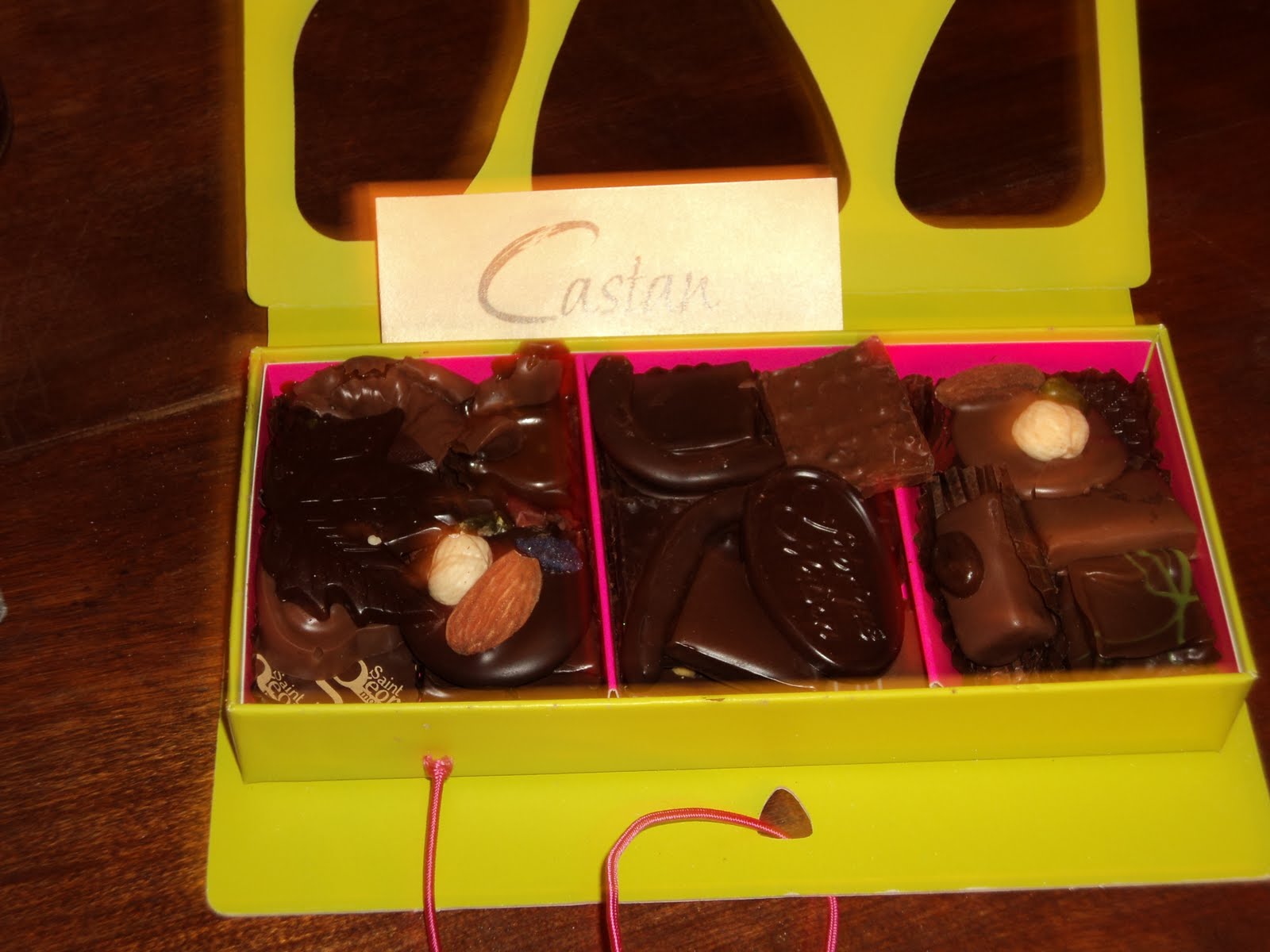
My earliest recollections on arriving in France include chocolates in a special box tied with a satin ribbon, souvenirs at the newsstand or bookstore in a special decorative paper and household items like glasses or mugs boxed and wrapped elegantly and efficiently by a storekeeper with impeccably manicured nails. They treated even the most insignificant of pottery bowls, olive wood trays or books like a luxury item from Hermès or Baccarat! And the way in which they wrapped them—with the seam on top and the ends with triangles. (For a "how to," see http://www.youtube.com/watch?v=YiXhxA9a39A.) All of this care and detail contributed to the oh-là-là impact of packaging.
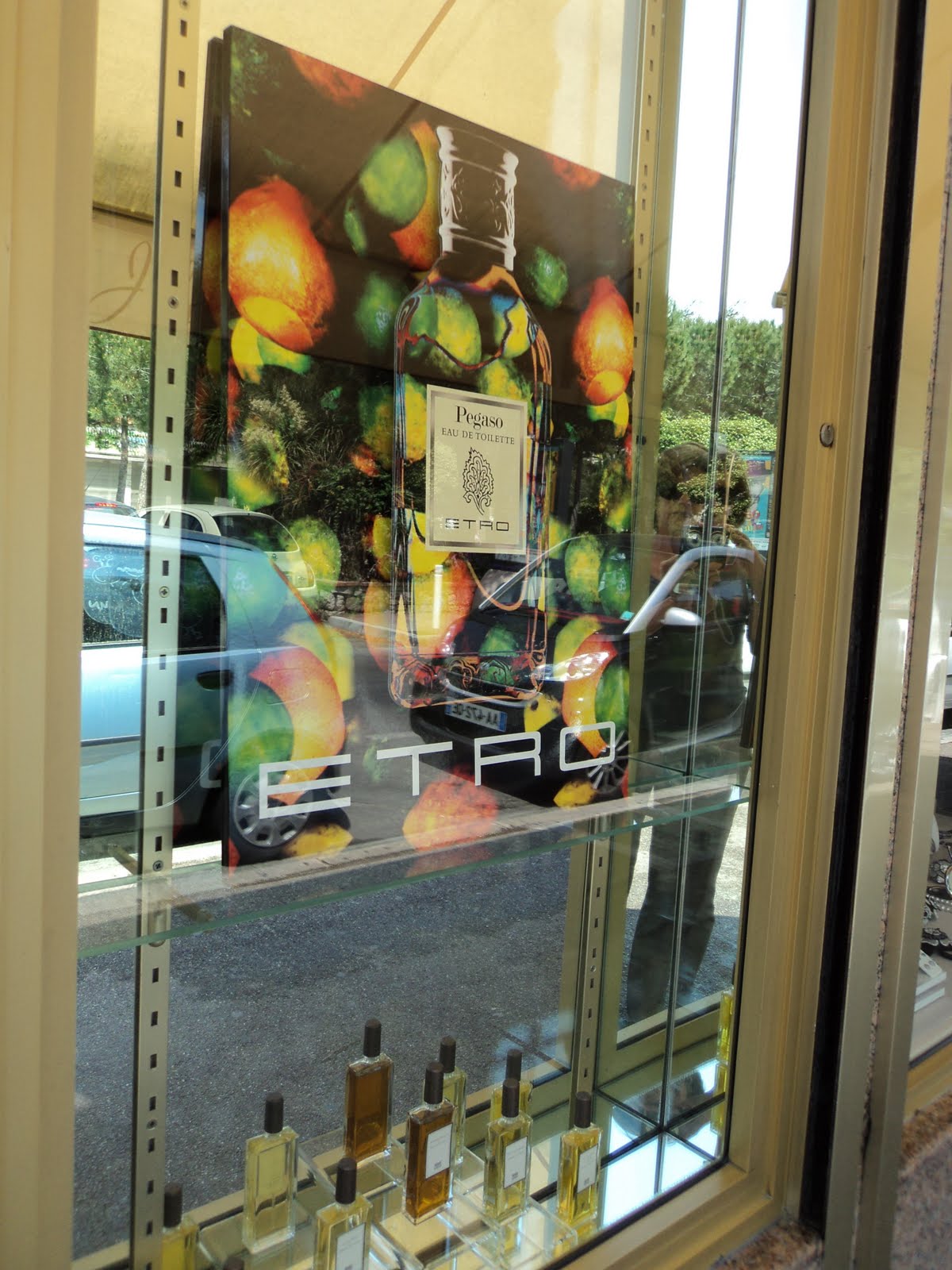
Packaging has extended beyond the packages themselves to the decor of store windows.


The professional exhibition, Emballage, which ran Nov. 22-25, 2010, at Paris Nord Villepinte Exhibition, had more than 1,300 exhibitors, providing innovative and sustainable displays on beauty, beverages, food and health. Packaging adds distinction and contributes to branding.


Sephora - Nice Etoile
The November 2010 press kit for the exhibit Emballage quoted Charles Duclaux, Groupe L’Oréal, as saying that packaging helps distinguish brands and serves as a “vector of innovation.”

Chantal Sandoz, Groupe Carrefour, said that “ideal packaging solution. . . matches the product.” (for more information, see http://en.emballageweb.com/ExposiumCms/cms_sites/partage555010/presse/DOSSIER_DE_PRESSE_SALON_GB.pdf ).


Good packaging of small presents makes me want to open them. Packaging of store-front windows draws me in. Maybe I should rethink my packaging of Christmas presents. . . .


Chocolate store - Antibes


Sometimes professional gift wrapping is preferred!

Thursday, December 9, 2010

Sophie and South Beach by Jane Tolbert


My daughter just arrived from France last week after a 24-hour delay in Nice due to a snow storm in Frankfurt.

She came with Sophie the cat and a friend who had visited about 12 years ago. At the time, both were teens with dyed, carrot-colored hair. The cat was a small kitten. The first visit was one of falls on skateboards, fake fingernails that came off when bowling, the discovery of Peter Pan peanut butter, trips to the Florida springs and those “all-you-can-eat” buffets, and hours spent in department store dressing rooms trying on prom gowns. We planned to speak only English, and we vowed to make photo albums. But the reality was different. Conversation often regressed into French, and the photos have remained in a desk drawer at my daughter’s father’s house.

The past few days have involved familiar and new activities. The familiar included the walk to Lake Alice to visit alligators and wading birds, to Publix, where Oreos, cheesecakes and cinnamon buns continue to hold fascination. The new outings include Harry’s Bar, which serves blackened food of a New Orleans style cuisine, the Mall at Millenia, from which we emerged empty handed, the local clubs where everyone looks so young and dances just by swaying because their feet have been immobilized by the sticky drinks spilled on the floor.

Dinners take place amidst rapid-fire conversation with everyone talking at once. “How do you translate. . . . armadillo . . . cranberry in French?” “What are the ingredients in mamajuana? Pumpkin bread?” “Who ate half a Klondike?” Our visitor takes photos of just about anything--supermarket produce and California wines, sidewalk cafés or evening gowns in those department store dressing rooms. Photos against a backdrop of brick walls give a ghetto look. American police cars with flashing blue lights, taxis and muscle cars from the 70s. . . .all of which will make up albums to share on FaceBook.

We didn’t make it to Disney on the trip 12 years ago. But this time, my son, daughter and guest spent a day at Universal’s Islands of Adventure where they visited the Wizarding World of Harry Potter, the Cat in the Hat and other attractions. The cold weather seemed to keep a lot of tourists away. And I had to work. But I did get to see the photos.

This visit has had a different purpose—destination South Beach for several months to work. The French guest hopes to learn more English in Spanish-speaking Miami. My daughter has never worked in the States, so this is a new experience for her.


Sophie did order room service at the hotel. Photo courtesy of SR.

With the departure of the travelers this morning, the French cat Sophie seems particularly unhappy. After all, she had spent an additional 24 hours in transit to get here, a night in a hotel room and crammed into a cat carrier, and now she has been left behind with her American cousins. Most likely Sophie will not see South Beach. But we will all see the photos.

Tuesday, November 30, 2010

C'est toujours l'heure du cafe by Jane Tolbert

What is it that gets many of us up in the morning. . . makes others double park and risk getting their car towed. . . . cigarettes, never, but coffee definitely! The Monday morning flea market at the Cours Salaya (Nice). Before I can begin checking the stalls of books, jewelry and furniture, I stop for coffee. When shopping with my daughter or before any major decisions are made, we stop for coffee. Historically, coffee underlies international relations. Coffee was introduced to Paris in 1669 by a Turkish ambassador to the court of Louis XIV. . . .

Antibes


My initial café experience ended after one shot of bitter espresso. It took several years and much convincing before I returned to the counter. I started with the cappuccino (with lots of sugar), macchiato then coffee with sirop d’orgeat, an almond syrup. My coffee epiphany came with my first cup of sweet Turkish coffee at Ninon’s kitchen table in Opio served in Picardie glass. She made the coffee in a much-used ibrik, which looks like a metal pitcher with a long handle. Two tablespoons of finely ground coffee with two lumps of sugar headed in the ibrik on a gas burner. Here is where the operation became tricky. About the time the coffee was beginning to foam and just before it boiled, the shop bell would ring. Clients downstairs in the antique store. I never saw it boil over, but apparently it often did. Remove it from the heat. Add a few drops of cold water so the marc, or grounds, settle. Sip it slowly to avoid swallowing the grounds. I may not have the recipe. . . . It always tastes better in Opio.

Plates that have the price of your drinks (early 20th century)


So my love affair with coffee began along with my search for the ideal coffee maker—one that was easy to clean and produced good coffee. I think we’ve all tried the two-sectioned Italian coffee maker, the French press or perhaps friends have given us a cast-off espresso or cappuccino machine, all of which are difficult to clean. Enter the series of machines that have no mess and produce the same taste of coffee each time like the Tassimo or the Nespresso.. . . an answer to my caffeine-induced prayers.

So in the past years, I have gone from avoiding coffee to tracing out an itinerary and emploi du temps based on the location of cafés. I also carry a coffee machine in the truck of my car. You never know when you’ll end up in a hotel, at a friend’s or in a meeting with no coffee.

Cafe chairs at the Crystal, Juan-les-Pins

Thursday, November 25, 2010

Happy Thanksgiving!


Thanksgiving Day -

National headlines on CBS tonight--15 million out of work. The Black-Friday warm up. More than half-a-million holiday jobs created against the backdrop of 10 percent unemployment nationwide. Fifty tons of turkey shipped to US troops in Afghanistan. Turkey trot races throughout the country. The 84th Macy’s Parade. Local headlines--the list of retailers open on Thanksgiving Day and the more than 300 meals served at the St. Francis House. But no stories focused on the panic of some cooks about to attempt a Thanksgiving main course for the first time. . . .

Childhood memories—the turkeys we made out of pine cones, pipe cleaners and colored paper. Elementary school plays about Indians and pilgrims. Singing “Over the River and Through the Woods” when the outside temperature was in the 70s. Grandmothers, aunts and mothers bent double over a steaming turkey roaster. Little did I realize at the time that one day this would be me!

All families have traditions. Sometimes it’s the guest list or who hosts the event (usually a rotation system). Other times, it’s the menu. Almost always, a secret recipe that cannot be divulged.

Thanksgiving represents hours spent in the kitchen. Lynette (Desperate Housewives) commented, “I spend eight hours cleaning, eight hours cooking and my family sits down for eight minutes.” Cleaning was one thing, but finding a recipe that met my criteria (affordable but tasting like something from Fauchon’s or the White Apron, easy to make and little cleanup). . .

As long as I can remember, we said we would break with the tradition of kitchen servitude. This year, we attempted to make restaurant reservations two days in advance of Thanksgiving. That failed, so we moved to Plan B, a simple menu with everyone contributing a favorite dish.

But simple became complex. My contribution to the meal—a main dish (whatever was I thinking)—sent me into a panic. But a close friend had served crab cakes at a tango reception, and she reassured me. But crab cakes required many more ingredients than I imagined possible. Plus, a minuscule container of lump crab seemed prohibitive. And what if I failed?


Yesterday, the Publix fish monger understood my plight and offered a secret recipe of his own. Today, I entered the kitchen about an hour before guests would arrive at my sister's. I had my new knives, cutting boards and skillet. The crab cakes emerged from my frying pan crusty and flavorful.

And my recipe. . . I hadn’t planned to share it, but the family and friends have been sworn to secrecy.

Tuesday, November 16, 2010

The Raccourci to becoming (à peu près) quintessentially French. . . . by Jane Tolbert

Antibes

Years and years of working on the French “Rrrrr” has been to no avail. I am always pegged as an American. Whenever I am in France—Paris, in particular--my American accent surfaces, obtrusive and grating. Language tapes then DVDs and patient friends have all tried. During my early travels, I hesitated to ask directions of passersby. Gendarmes made me repeat my address -- Rue St. Honoré. “Roo?” they questioned with a smile. It could have been worse for an “R-challenged” Francophile. I could have lived near the métro Barbès-Rochechouart.

When I moved to the South of France (and fortunately to the Chemin des Ames du Purgatoire in Antibes) , two things occurred. First, I found myself in an area with an infiltration of Italians and international residents that created a nice mixture of accents. The Rrrrrs no longer took on importance. Next, the languid lifestyle and relaxed conversation got me interested in popular culture. But it took years of café sitting for me to discover an effective way of becoming French (or at least, French à la provençale).


Juan-les-Pins

Developing a proficiency at pétanque would certainly be more productive that additional years working on the Rrrrr.

Pétanque, which takes place in most town squares or on dirt parking lots, seems to be a passion in Provence that affects all ages, both males and females. Just in Juan-les-Pins alone, several pétanque groups met around the Pinède and in the Square Frank Jay Gould, overlooking the Mediterranean. But other sites also existed (such as along the Place Villmorin). In Antibes, groups of pétanque players have gathered for years near the Plage de la Salis at the end of the Boulevard Albert Ier.

Juan-les-Pins

Teams of players take turns tossing a metal ball (that weighs approximately 1 pound 10 ounces) as close as possible to a small wooden ball, the cochonnet (piglet). With feet planted and knees slightly bent, the players focus, concentrate then, with their palms turned down, lob the ball.

Now that I have had this epiphany, the next issue becomes where to purchase a pétanque set in the States? And where with our paved drives and green lawns will I find a nice dirt terrain de jeu where I can practice without injuring passersby or pets? Ideally, it would be with proximity to a café . . . .


Chez moi

I made a quick call to Sports Authority to learn whether the store had pétanque sets in stock. “No, I haven’t heard of that really,” said the clerk. Amazon carries nearly everything and offers a beginner set that includes six or eight chrome balls for around $30 (plus a hefty shipping charge for the 13-pound package). Competition sets sell for much more.

Given that the pétanque set would not be forthcoming, I called ABC about the pastis. “Can you spell that for me?” The store keeper seemed skeptical but checked. He carries both Ricard and Pernod. Mais quel dommage! I do not like pastis, but at least it’s a start to introducing the “sport” of pétanque to Gainesville.

Tuesday, November 9, 2010

Insolite by Jane Tolbert


A little column known as the “insolite” carried by the Nice Matin provided me with hours of instruction in the French language and culture. The term “human interest” is a close English equivalent.

Articles I remember include:

- A small poodle escaped injury when a car and its occupants were crushed by falling rocks in the Gorges de Cians in the arrière-pays Niçois.

- An elderly British cyclist plunged to her death after missing a turn in the Gorges du Loup.

- The wax statue of former Community Party leader Georges Marchais was tossed into the bear pit at the Paris zoo. . . .

I don’t remember when the transformation occurred, but these days the “insolite” has been replaced with “faits divers.” Is this a more objective term? Or is journalism becoming more “banale,” or insignificant ?

I glanced at the Nice Matin and La Provence yesterday, hoping the “insolite” had returned. Mais non, only the human interest stories appeared.

- La Provence – “faits divers” – a VW Golf reached speeds of 200 kilometers per hour on the autoroute before hitting a Peugeot (fortunately no injuries) and stopping.

- Nice Matin – the rose-colored waters have been drained from the fountain at the Quatre Chemins in Grasse.

- Nice Matin - Saturday, Jan. 9, 2010 – During the holiday season, a time when basement wine caves are well stocked for Christmas and New Year’s celebrations, thieves took food, wine, champagne and even the dog croquettes!

In the States, we have human interest stories. The family cat left behind during a camping trip was forced to hike 3,000 cross country to return home. In the beach community of Indialantic, pranksters repeatedly have stolen (and returned) a life-size plastic calf that stands outside of a local ice cream store. Other stories include the post card received 40 years after it was mailed, or the astronomical telephone bill. . . . (we would like to think these are “insolite”).

But many stories, perhaps deemed too insignificant, have been missed by the media.

- For a Halloween party, two sisters dressed as Carmen Miranda, the Brazilian dancer and actress known for the colorful scarves and cornucopia of fruit on her head, were mistakenly identified as a Fruit of the Loom advertisement when they entered a local club.

- A university professor hoping to avoid attracting attention when he left a reception early got trapped in a stairwell and had to call for help.

- A neighbor in a Halloween gorilla costume, pulling a tinfoil space ship, said he went out of his way to avoid police officers who were questioning a crazy-looking man on the street.

- The recent city art fair at which passersby seemed more interested in the food and dogs rather than the displays.

The media do need to keep covering the “insolite” or even “faits divers,” if for no other reason than to provide foreigners with the opportunity to learn about our language and culture.

Monday, November 1, 2010

The Strike is Over. . . for now by Jane Tolbert


A Note taped on the entry to a primary school in Juan-les-Pins announcing a strike last May.

Strikes seem to be part of French life. The approach is you strike first then negotiate. Strikes have impacted everyone with blocked roads, closed schools, delayed flights or no mail.

Most US media covering this recent strike attributed the cause to the proposed shift in retirement age from 60 to 62. Mon dieu! We have already heard about the French law, now out of favor, that allows a 35-hour work week reimbursed as 39 hours. Here, if we have a job, we feel we are working more than 40 hours per week but are paid for 35. C’est l’amérique!


An informal inquiry to a few friends provided a range of perspectives. Overall, more people live longer, and the current generation of workers and companies have to pay for retirees. My friend in Toulouse accurately points out that France needs to “adapt the retirement age to life expectancy.” Other problems concern what is known as “les charges socials,” or social charges (or percentages that are withdrawn from your salary for health, unemployement. . . ),which consume a hefty portion of a salary and make employers reluctant to take on additional personnel. And then, of course, the perpetual problem of distribution of wealth. . . . But even with reform, the situation will decline again in the next 10 years, and everyone fears working to the age of 75, just like in the States.

Another friend, who divides his time between Paris and the South of France, pointed to the French sense of “entitlement” to work less and gain more welfare. It’s no longer a country of birthrights and aristocracy. The young people marching in the streets, clamoring for jobs and a fairly early retirement age, may not realize they will be footing the bill.

A retired educator attributes most of the problem to the pension plans, the loopholes in tax laws and the large fortunes.

Three perspectives, but all individuals agreed the strike and violence would subside with the start of vacation around the Toussaint (All Saints Day). And it has.

With the guarantee of minimum public service (e.g., transport) and the lack of pay for those on strike, today’s “manifestations” appear to be weakened strains of what they were years ago.

My personal experience with strikes goes something like this—for years I was oblivious to many strikes unless they affected me personally (air flights, mail services or public transportation). Awareness came later.

November 1996—I was teaching and the kids were in school in the research park of Sophia Antipolis. The French truck drivers blocked many roads and fuel depots to negotiate higher wages and retirement at 55. Given that we lived within walking distance, the strike didn’t affect us but it did affect some of my students who used public transportation. And we did get stuck in a blockage of slow-moving trucks (opération escargot) and watched the gas gauge decline. Freezing weather forced us to keep the car running to stay warm.

When I returned to France in early May 2008, I planned to pick up my shipment at the port of Marseille in late May. However, the strike of public sector and transport workers translated to mean my possessions were somewhere on an offshore vessel awaiting to be unloaded. I waited until July 2, somewhat inconvenienced by the projects and clothing that remained . . . just out of reach.

The strike may be for social reform, but it leaves many members of the public feeling somewhat grouchy with the inconvenience.


And many of my friends have great credentials but no jobs. . . .Maybe retirement is a bit premature, n'est-ce pas!

Wednesday, October 27, 2010

Almost business as usual by Jane Tolbert


Sunrise at Destin


It seemed like just another day on the beach. Sand crabs scuttled about, but when a shadow passed, they made quick dashes to their holes. Dogs romped happily. Seagulls lined up facing the gulf. Sunrise and sunset were spectacular performances from the beach and hotel decks.


Almost business as usual except for the dearth of tourists. Those few beach goers were there for two conferences held at the Sandestin Hilton.

Cabanas on the Destin beach


A few locals attributed the drop in tourism to the negative media coverage and misconceptions that followed the Deep Horizon disaster of April 2010. The print media continue to revisit the issue with headlines like "Florida Panhandle hotels hurt by oil spill's effect" (LA Times, Oct. 23, 2010) or "Oil Fears Still Crimp Tourism" (St. Pete Times, Oct. 14, 2010).


Destin is located between the Gulf of Mexico and the Choctawhatchee Bay (I had to look up the spelling but wouldn't attempt to pronounce it), about 30 miles south of I-10. On my first trip to the Emerald Coast, I walked barefoot on the powdery white beaches. I found no tar balls but only a few unwanted visitors--jellyfish and minuscule Portuguese Man of War brought in with the wind and surf. I dined with a friend in the Baytowne Wharf area. No waits for a table on the terrace, and only a few parents pushing strollers or pedestrians with dogs on leashes wandered the streets.


On a more positive note, the Hilton offers fantastic accommodations. Its rooms go beyond the wild expectations of most parents--a sleeping area for kids that is separate from the bedroom/ sitting room and balcony for adults. Additionally, the hotel has indoor and outdoor pools and play areas for kids. Of course, when my kids were small, I never could have afforded these accommodations! But as a conference participant, I received great rates.

The hotel includes the 13th floor


Miles of nature preserves border this highly developed area of hotels, spas and golf courses.


The true test of a successful beach town--would I return? Long drive. No tango, but friends. Not the delightful bustle of South Beach, but peace and calm. Night activities (Fourth of July and New Year's) within what a Swedish friend called "crawling distance" for those who imbibe sound tempting. . . . But could someone tell me what is a bomb shot?

Wednesday, October 20, 2010

In Search of Skink and Tea Cake by Jane Tolbert


Now that I have moved from Melbourne, I can return as a tourist and visit new places. As a long-time Florida resident, I really wanted to meet some of those quirky characters described by Carl Hiaasen and Zora Neale Hurston like Skink in his shower cap or Tea Cake!


Florida is a land of contrasts. After leaving the glitz of the Mall at Millenia, I stopped at the Lone Cabbage Fish Camp, located on SR 520 just west of Cocoa on an isolated stretch of road. The place is known for its airboat rides, which cost $22 and take visitors at speeds of up to 45 mph through grassy marshlands where the St. Johns River blends and meanders in marshy wetlands. According to the ads, the “Lil’ Twister” costs a little bit more. No quirky characters—just tourists, a fly yellow Corvette and some fancy duallies lined the sand parking lot. No wildlife either. But tourists there lined up for local fried specialties—gator, turtle and catfish—and airboat rides.


Beachside, the narrow barrier islands nestled between the lagoon and ocean, has been known as the “best kept secret.” Long known to surfers and turtle watchers, it’s also an area of restaurants and small cafes, quiet beaches. The mom and pop motels have been replaced by chains. Gated communities. Paved bike paths. Panera Bread and Starbucks. Families on bikes and roller blades. No drunks, bums or former governors in shower caps. Any semblance of quirky had become gentrified.


Maybe if I tried US 1? Or would I have to go to places like Everglades City to experience the characters of novels? That would have to wait for another trip.

The drive north on I-95 from Melbourne to Ormond Beach took me past endless developments, then endless miles of cabbage palms (our state tree). At Route 40, I joined the lines of motorcyclists, which had come to Daytona for Biker Fest. Bikini clad bikers, boots, tattoos, long hair, military pants and generally no helmet. They traveled as an orderly group, but they took over parking lots and lanes of road.


Past Barberville with its junk yard that now that carries 10-foot tall pink, cast-iron chickens, flower pots and just about anything else. Past Astor, which has Blair’s Jungle Den, a drawbridge and waterfront cafes and what looks to be a 1,000 year old oak with a plaque commemorating the travels of William Bartram. Billboards advertise whoopie pies, road signs warn of bears for the next 23 miles, and there are always trucks selling peanuts.

I drove into Gainesville just after 90,000 Gator fans settled in for the homecoming game against Mississippi State. Turned out to be a quiet evening. The Gators lost the third game in a row. Anyway, quirky characters didn’t usually wear orange and blue or attend tailgate parties.

5:54 a.m. Sunday morning. The squeaky wheels of a shopping cart grated over the rough pavement. The sounds of bottles and tin cans.
“Where are you you little monkey? I’ll git ya!” Of course, the monologue, peppered with curse words and obscenities, has been toned down somewhat.
From one of the houses, the sound of “Shhhhhh.”

“Don’t SHHHHH me!” And the character began to thrash the bushes in the marshy woods across the street, a place most of us would not venture in the daytime, not to mention the early morning hours, when hoot owl and predatory birds scream as they swoop down for a kill.

Tea Cake, who had been bitten by a rabid dog? One of the governor’s developers he had abandoned in the swamp? And did I really want to find out at 5:45 a.m.?

Tuesday, October 12, 2010

Graffiti for the Cure by Jane Tolbert


Graffiti for a cause

Years ago, our great aunt asked us to look at an inscription left by an ancestor in the tower of St. Gatien in Tours (12-15th centuries, Loire Valley). It was a foggy, rainy cold day. When we arrived, we asked the guard about the inscription. He quizzical look made us think he did not understand us or care.

We climbed the tower. But instead of the inscription of our ancestor, we found walls covered with chiseled marks and graphics, attesting to the passage of centuries of graffiti artists.

Did that many people have that much to say? Or did they just want to say they had been there?

Cities have devoted millions of dollars to cleaning buildings of graffiti. But in Gainesville, we have a wall, which has been known for decades as graffiti friendly. On a regular basis, what has been called a “cement blog” carries news of engagements, makeups or breakups, birthdays, sports rivalries, as well as a permanent commemorative section to the slain UF students. Some of the graphics are hastily done, sloppy, but others seem worthy of a portfolio of a graphic designer. Usually, students work in teams, often at night, with shopping carts from the nearby Publix loaded with paints and brushes.


In the past week or so, a group of students painted a large portion of the wall pink in recognition of Breast Cancer Awareness Month. This pink wall attests to a growing recognition of the need to bring talk of the cure into daily parlance and into a series of activities that promote awareness—a tango for the cure, led by our UF tango faculty advisor and his fiancée, emails (in all languages)—une “CHANDELLE pour le cancer
Tout ce qui est demandé c'est de garder cette flamme en circulation.”

The message is early diagnosis can save lives. This graffiti wall, unlike that in St. Gatien (which may have a popular culture value, however) carries a worthy message. But is everyone listening? And is healthcare accessible to all who need treatment?


Tuesday, October 5, 2010

The evening the bats ran late by Jane Tolbert


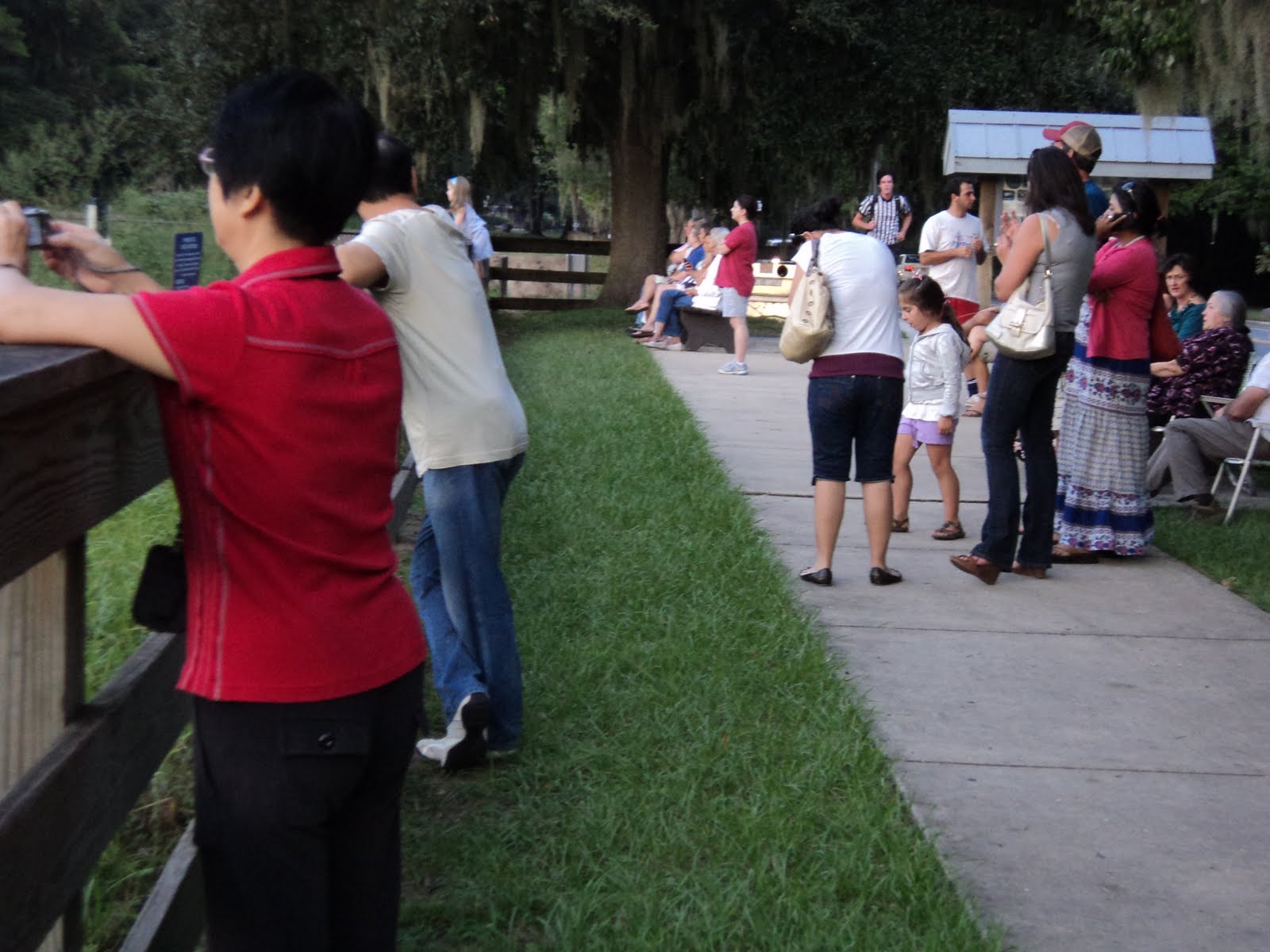
An international crowd gathered, some in flip flops, others in saris, others looking quite the Americans with lawn chairs. . . .All were there for a reason—to watch bats emerge from two bat houses that stand across from Lake Alice on the University of Florida campus.

Accounts on internet sites estimated that more than 100,000 bats would emerge around sunset, streaming out, ribbon like, from the bat houses. The crowd began to gather early, about 20 minutes before sunset, the time when the bats were to appear. It was cloudy, slightly cooler. Maybe the bats would emerge ahead of schedule.

Some people leaned on fences. Others sat on benches. Twenty, then 30 minutes passed, and still no bats. As the moment approached--official sunset was at 7:11 p.m.--we became slightly restless, just like in a theatre when we await the KNOCK KNOCK KNOCK that signals the beginning of a performance.

Cars paused to allow pedestrians to cross—kids and parents, babies in strollers, a lady with her foot in a cast. Sunset had long since passed, and it had become chilly. Where were the bats!


Given descriptions of the bat phenomenon told of a wide, black, fluttering wave, any motion caught out attention in the growing darkness. Did I see a wayward bat or dragon flies, small birds. . . .I looked for any sign.

When the bats finally made their appearance, we almost missed them. No streams of bats appeared against a slightly lighter sky, but instead only a slight flutter of leaf-like wings appeared when their rose toward the sky. Our poised cameras did not pick up bat images but only the silhouette of spectators in rapt attention.

Maybe the bats need the three knocks to signal the start of the performance earlier.

Tuesday, September 28, 2010

Pampered by Jane Tolbert


Early mornings . . . my internal alarm goes off before NPR comes on. I make a frenzied and inefficient rush to fix coffee, grab breakfast and run to work. However, my path is littered with obstacles—crumpled rugs, toy mice and rearranged furniture—all evidence of some wild pet play during the early morning hours.


Coffee—shower—dress—pack bag—make an effort to make the bed—tasks that are normally fairly simple in a pet-free house. However, here, my one resident cat usually has cousins visiting. To access the coffee pot requires negotiation--a cat treat, an open window so they enjoy the early morning. If a dog is visiting, that means a trip outside.


The cats usually beat me to the bathroom—that’s where the cat hair brush is kept, and they both want to be brushed before I can take a shower and put on makeup. I’d like to scrub out the shower, but a damp shower is another favorite place to pad and track prints. . . .and of course the bed will never be made because I find them sacked out, dead to the world.

While I race liked a crazed person on a caffeine high, the pets, exhausted from nocturnal activities and from early morning ritual, now lounge. If laundry or ironing is in the plan, the pets position themselves atop the basket of clothes, making this impossible for now. Back to the closet to find another outfit for work. The vacuum at any time of day—nearly impossible—not just because the pets dislike the sound and disruption. But pet toys have been known to clog even the most powerful systems.


People from pet-free households probably wonder why my books and notes are scattered and chewed, or why makeup brushes can be found in odd places and why my clothes always seem to have pet hair or snags. . . .

But on the flip side, these pets are always happy to see me, and they never have grumpy days or mood swings. . . or complain or want to return to their cave. Most importantly, they are teaching me to loosen up. They have given up on my caffeine addiction, but so what if the bed isn’t made, the clothes aren’t ironed. . .

Wednesday, September 22, 2010

ça passe ou ça casse . . . by Jane Tolbert


A narrow street in Belgentier (Var), France, where I feared encountering a resident or pet emerging from a doorway or someone laden with shopping bags of baguettes or fresh product.

Often, when cars and people meet in situations like this, they joking comment, "Attention les pieds" (watchout for your feet) or "ça passe ou ça casse" (it will get through or take it out).


Parking in alleys requires small cars, rear view mirrors that fold flat as well as the ability to straddle a sidewalk without leaving too much of your fender in the main road. An invaluable skill is also to park your car in the space the size of a tiny envelope in less than 10 seconds flat. It's not that traffic won't stop, but it's more than someone else might get into the space.

Older parking garages accommodate only small cars--the length of newer cars makes it nearly impossible to back in and out of spaces or negotiate the spiral shape of the garage ramps.

Europeans have always seemed more environmentally minded, but their selection of a car has also been affected by the price of gas and the size of the roads, and until recently, the tax on engine size.


Street scenes like this one in Juan-les-Pins attest to the value of a small car.


With more than 80 percent of Floridians commuting in a car to work, thinking small is becoming the next big thing. Everyone who has a parking permit for the University of Florida campus knows that it as only the permit to locate a space. Parking lots have spaces designated for zip cars, scooters and car pools, leaving few options for faculty and staff who drive cars. Due to the lack of parking spaces, an increasing number of people have opted for scooters or bikes. Even the Smart is making inroads. In Europe, it offers the ease of parking both parallel and perpendicular to the curb. In the States, it can beat out competition for tight spaces.


In a world of uncertain gas prices, a growing sense of social responsibility and climate change, small is becoming the next big thing, or so it seems.


Although large cars might carry some status, they are impractical in many French cities and increasingly in the States. Here, a US pickup truck and a French Twingo face off on the Cap d'Antibes. On both sides of the Atlantic, the behemoth SUVs seem to be going the way of the fur coat—garaged or closeted.

But small cars do offer one main disadvantages--their small size precludes taking luggage or even a large purse. Fortunately, I do not have a chauffeur, or I would have to worry about him also.