Wednesday, November 25, 2009

Thanksgiving Magic by Jane Tolbert


From a child’s perspective, Thanksgiving is magical. It is that last school holiday before Christmas and often a time to see distant cousins and grandparents. While the adults endure copious meals, usually the children can be quickly excused only to reappear at dessert. At least, that is how our family dinners proceeded. During the lengthy part of the meal and clearing the table, we played in our tree fort or under the dining table, where, hidden by the lace tablecloth, we raced our toy horses and cars up and down the borders of an oriental rug. I am sure most of the adults would have liked to have joined us.

When we moved from Northern Virginia to Florida, we tried to capture the magic of those northern Virginia Thanksgivings with family and friends. Years passed before we fell into another tradition. Our Swedish neighbors introduced us to new culinary delights and lively conversation that touched on quantum theory, philosophy, sales at TJ Maxx or human nature. These meals were always followed by a walk around Lake Alice and then the new Disney movie. But after many years, they returned to Uppsala, and a Franco-Scottish couple, who had become part of the tradition also moved away.

Most recently, our Thanksgiving holidays have centered on outside activities like bike rides or walks in a nature preserve. When I was still teaching, my students said they envied my Thanksgivings. Theirs involved frantic travel to a distant city, worry about final semester projects due on their return to campus and too much food and too many family arguments. They wondered about a formula to capture the magic of Thanksgiving.

This year I hesitated to plan festivities for Thanksgiving with the recession and the fact that everyone with a day job or commute would be thankful for a day to . . . well, “chill.” But some of our Swedish friends will be back. And maybe we can convince our Franco-Scottish friends to join us also. The meal itself is secondary. We are very fortunate to have such wonderful friends. And that is the true magic.

# # #

Thursday, November 19, 2009

The Great American Rivalry by Jane Tolbert


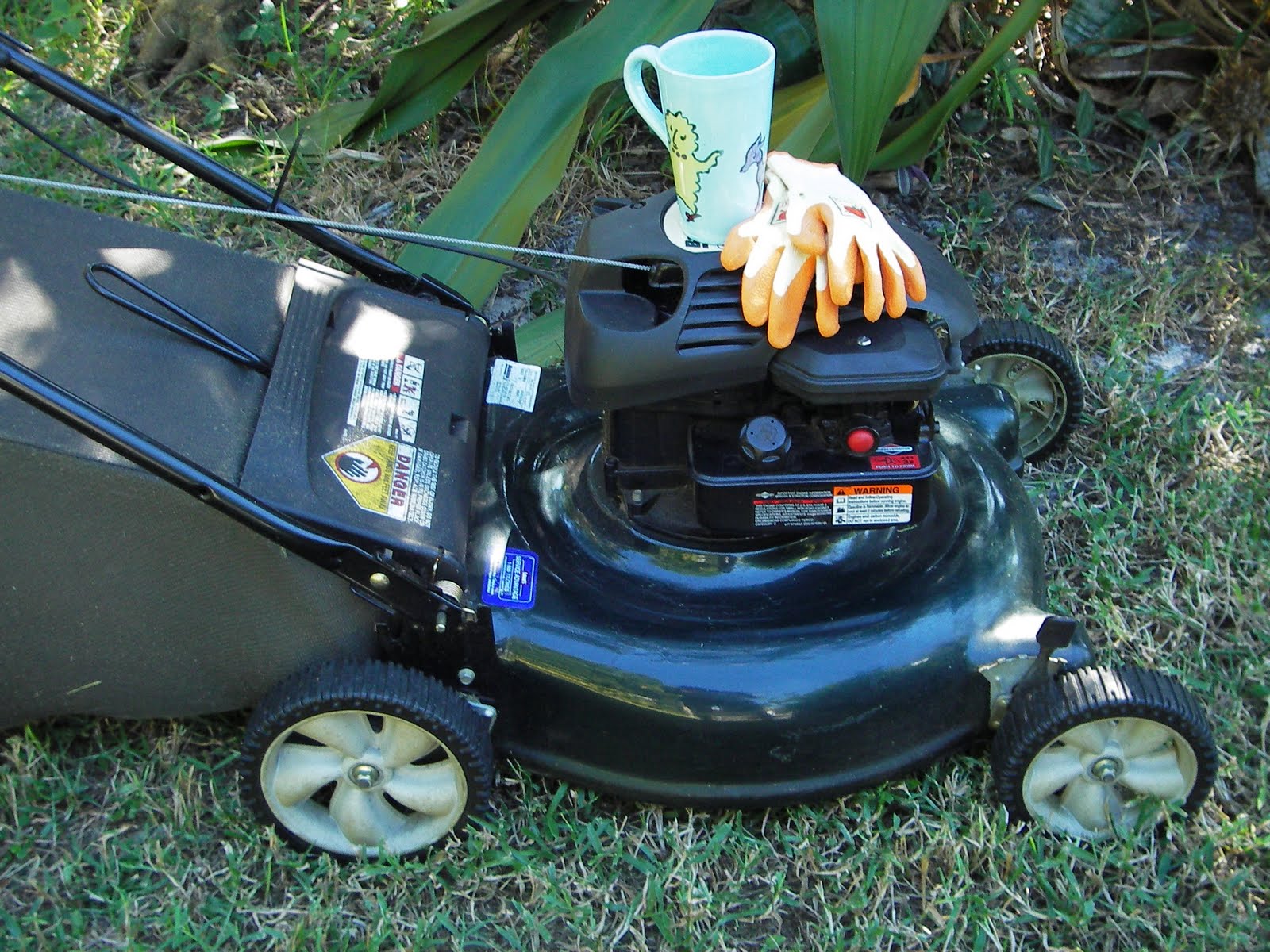
What is it about peaceful weekend mornings and my cup of coffee. The minute I sit down on my back porch, the noise begins. Sounds from next door. Across the street. The American weekend rivalry has begun.

From somewhere—a garage or a back shed-- power mowers and blowers emerge, and the great race begins with a deafening roar. It’s all about residential lawns blanketed with St. Augustine grass. This American weekend rivalry pits neighbors against neighbors.

All that’s missing is Heyword Hale Broun in his plaid jacket with large handlebar mustache reporting live from Suburbia, America. The rivalry in the Army Navy games is nothing compared to the neighborhood rivalvy to finish the yard chores for the weekend.

You would have to be out of your mind to want St. Augustine grass in Florida. But here it is—these lawns which guzzle at least one-third (and by some estimates, nearly two thirds) of our fresh water supply and require constant nourishment are pervasive.

I knew nothing about St. Augustine before I became a homeowner. And now I can identify the host of insects that chomp happily on my lawn. An entomologist’s paradise! And my own observations suggest that when egrets land in my yard, then I know I have an army of critters chomping on the root system. If, several days later, my lawn rolls up like a carpet, I know I have white grubs.


With St. Augustine comes additional requirements—pesticides and herbicides and fertilizers, which add further to the woes of our water supply. The professional lawn services seem to be an added necessity. What is the origin of this St. Augustine addiction? Northerners who brought the lawns south? Or photographs of British estates?

The silence of the morning has been shattered irreparably. One neighbor who always sports a “web survivor” tee shirt has already started mowing. The other neighbor begins in the evenings Those across the street, mow to Christian rock in the mid afternoon. The house behind me is empty for now, but I am sure the new residents will fill in those silent hours.

I try to resist the temptation to join in the ruckus. . . . But then I know sometime this weekend, I too will have to mow the St. Augustine. If I mow today, then perhaps tomorrow I can enjoy my coffee. Of course, my option is to bring on the egrets and grubs. I will replace those dying patches with indigenous plants. Now, if I can only convince the neighbors.
# # #

Thursday, November 12, 2009

Locked Out by Jane Tolbert


For generations, we have buried keys in the garden or flower pots or under statuary or left them with a neighbor. Fear of being locked out of our house runs in my family.

In the old days, you could always shimmy up a gutter or a vine. In middle-class apartments, someone always answered the interphone and buzzed you inside the main entrance. If you lived in more fashionable apartments, you could rely on a concierge.

The concierge has become obsolete or replaced by a system of gates and doors requiring security keys and codes. Hiding a key in the garden is also a thing of the past. These neatly manicured lawns behind walls and gates preclude burying a key (and those security keys with indentations cost les yeux de la tête to duplicate).

It was not my choice to live in a gated community. But from January through April 2009, this was the only place I could find in the South of France. For someone like me who fears getting locked out, this apartment was the stuff of nightmares. The main gate for pedestrians had an access code (1-2-3-4#) and another for the external set of glass doors to my building (4-3-2-1#). In this gated residence in which most units were still unoccupied, I assumed there would be a 24-hour guard or at least a concierge. Au contraire. No one to call on the interphone. No backup mechanical system in case of electrical failure or if the battery in my remote died. I had a lot to worry about.

Electrical failures did occur--at the main entrance gate (both the pedestrian gate and car entrance), the two apartment main entrance doors (which did fail), and my own apartment door.

In January, my cat Lacey and I moved into our apartment. We were the only living creatures in our 15-unit building. Each time I left, I carried my keys and cell phone. The key to my apartment entrance also opened my apartment and the elevator to the garage. I left a spare set of keys with my daughter, who lived a mere 15-minutes away on foot. And I often left the balcony door open just in case I could climb in.

For a couple months, I did well. I left the apartment and returned without getting locked out but still felt overwhelmed by a slight feeling of trepidation. When the syndic, or governing body, of the units hired a guardian, I felt giddy, “Enfin sauvée.” I had been saved. But Monsieur Christian, homme à tout faire, only worked in the day (excluding Sundays) and returned to his house near Grasse at 7 p.m.

Even with the best of planning, the day came when I got locked out. It was one of those days. . . . The syndic, a collection of men and women with notepads, visited the residential park and issued decrees such as this one:

Nous vous rappelons que he stationnement des véhicules est intérdit sur l’allée de circulation. Residents (meaning me) could no longer park above ground but had to park in the underground parking lot.

But the parking lot had been flooded for two months. So on this day, I grabbed a set of keys, rushed to the basement with a large bag of garbage then went through another set of doors to check the water level in the garage. The doors closed behind me.

When I turned to go back inside, I realized I had taken the wrong set of keys. The elevator door would not open, and my cell phone had no reception. I escaped through the underground parking lot where construction was still under way. And oh miracle, the guardian was still there. He opened the main entrance to the apartment with his master key but apologized for not having a key to my apartment. Fortunately, I had left both the balcony and apartment doors cracked. But I might consider burying a key in the garden of the model apartment. Just in case. . .

# # #

Thursday, November 5, 2009

The Commute by Jane Tolbert


I used to like cruising along U.S. 1 with windows open and music playing. The road overlooks the Indian River Lagoon and is dotted with small harbors. But now that U.S. 1 is part of my daily, 40-minute commute to work, I no longer feel that sense of wild abandon.

For those of you unfamiliar with jobs and salaries in small Florida towns, the situation is like this. We accept the trade off of local jobs and low salaries. We don’t commute well. Until now, my commutes have ranged from a 10-minute walk to a 10-mile drive. With the recession, however, most of us feel happy to have a job, even if it means a commute.

The traffic varies from day to day. Most times the early morning traffic is heavy. But on a rare day when no one is on the road, I begin to wonder whether everyone took the day off and went to the beach. Today, cars, rock trucks, semis and buses vye for lane space. Curb-side sprinklers hit the car. I hope to miss the train (the 7:20 a.m.), which has 88 cars.

7:15 a.m. I leave the house. Seven stoplights later, I pass Beck’s Natural Medicine, which advertises seminars—Franken foods, stress or weight gain. Nance Cacciatore personal injury lawyers has a lighted board gives the time and temperature. This morning, it’s a breezy 75 degrees. The quiet harbor in the Ballard Park area behind the Brevard Auto and Truck Center punctuates the hustle and bustle of traffic. The Eau Gallie causeway and beaches beckon. What if I just spent the day on the beach. . . . would anyone notice?

Years ago, I had a similar feeling. I rented one room in an old building in Nice, France, and I commuted to IBM at La Gaude. Traffic snaked inland for kilometers along a switchback road. In the background were the snow-capped Alps. Then, like now, I wondered, “What if I just kept driving. Would anyone notice?” When I reached the main entrance of the company, the thoughts had all but evaporated.


7:27 a.m. I pass a pesticide company where numerous small, yellow cars sport black mouse ears and tails. On the other side of the road is a local mover, one that used to have my phone number posted in bold letters on its billboard. This mistake got me lots of early morning calls from clients who wanted to schedule moves. It could have been an opportunity to change professions, but instead I complained. There’s the Burger Inn, which advertises curb service from 10 a.m. to 6 p.m. Further on, the Pineda causeway offers the last chance to escape to the beaches on the barrier islands.

7:35 a.m. A osprey nest hangs over the road near the River Rocks restaurant. Just beyond stoplight number 15, tanker trucks emerge from nowhere and tilt precariously as they enter the passing lane. White and blue commuter vans whiz by, giving their occupants a white-knuckle ride. Cyclists ride on the edge of the road to access Riverside Drive, a road with older homes overlooking the water. Cars and trucks shift to the left lane to avoid missing the Barnes Road exist, an access to I-95 and my office. I need to be in the left lane when I pass the Harvey’s Groves sign with the large orange.

7:50 a.m. I’ve hit most of the 16 lights. I have memorized most of the billboards and businesses in both north and southbound lanes. McDonald’s coffee. Bud Light with 99 calories. An unsolved homicide. Memorial gardens. A Mexican restaurant. The marinas and RV sales.

At this stoplight, a billboard at the angle of the road advertises chiropractic services for those injured in car accidents. By now I have all but forgotten the beach, and it’s overcast anyway. I am sure that once I begin my editing job. . . those beach thoughts will dissipate. But then again, maybe not. . . . Geez, the parking lot is empty. Where is everyone!